Guide
PID Espresso Machine: What PID Means and Which Machines Have It
By EspressoGoods editors · Updated 2026-11-09 · How we research
We may earn a commission when you buy through links on this page.
Short answer
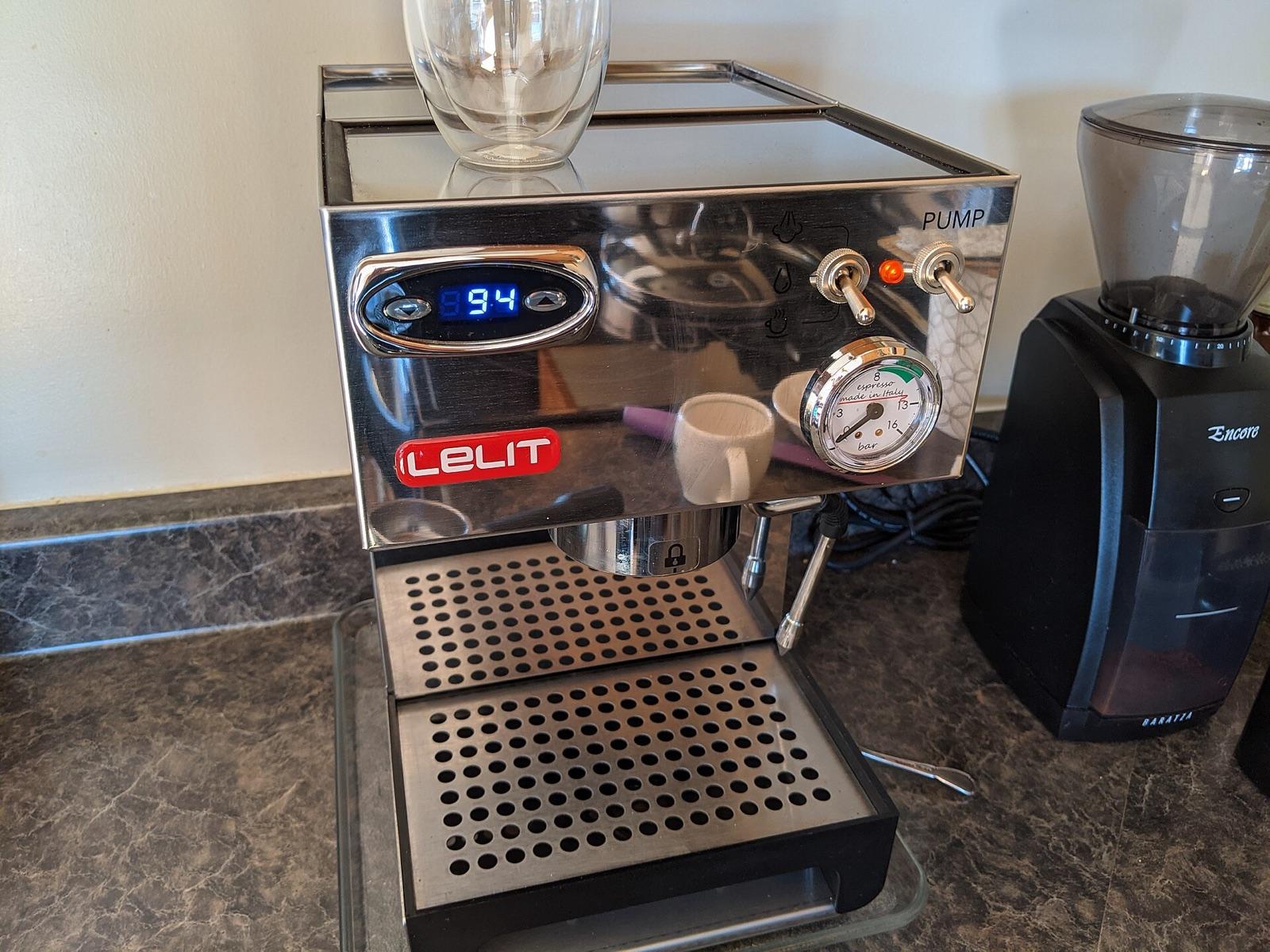
A PID espresso machine uses a Proportional-Integral-Derivative controller to adjust its heater and hold brew temperature in a tight range, which matters most on single-boiler machines and when you switch between roasts. It is not required: Quick Mill notes PID is not the only route to stable temperature. Machines with PID start around $110 (CASABREWS 3700 Essential), the Breville Bambino has it near $300, and the Rancilio Silvia Pro X runs two PIDs, one per boiler.
PID stands for Proportional-Integral-Derivative, and a PID espresso machine is one that uses this kind of controller to switch its heater on and off in measured amounts so the water stays close to a set temperature. Quick Mill, an Italian maker, describes it as a system that 'electronically regulates the heating element to minimise temperature swings'. Without one, a machine typically relies on a thermostat that turns the heater fully on below one temperature and off above another.
Why care? Temperature is one of the conditions in the espresso standards: INEI sets water leaving the group at 88 °C ± 2, and the heritage SCAA definition gives 90.5 to 96.1 °C. Below is what PID does, which machines in our catalogue have it according to their makers, and when it is worth paying for. Specs were read on 9 November 2026.
PID machines at different budgets
1. PID you can adjust, around $200
CASABREWS Ultra
CASABREWS lists PID with four selectable brew temperatures (194, 198, 201 and 205 °F), an LCD showing extraction time and temperature, and a 58 mm portafilter.
Buy it if: Trying different roasts at different temperatures on a small budget. Skip it if: You want a boiler rather than a thermoblock.
- Type
- Semi-automatic
- Heating
- Thermoblock Single Boiler
- PID
- Yes
- Portafilter
- 58 mm
- Milk
- steam wand (10mm)
- Water tank
- 73 oz (up to 23 cups)
- Size (W×D×H)
- 12.2"D x 10.31"W x 12.9"H
- Weight
- 13.5 lb
Specs: CASABREWS US product page (2026-11-09); CASABREWS listing on Amazon (2026-11-09)
2. PID in the smallest body
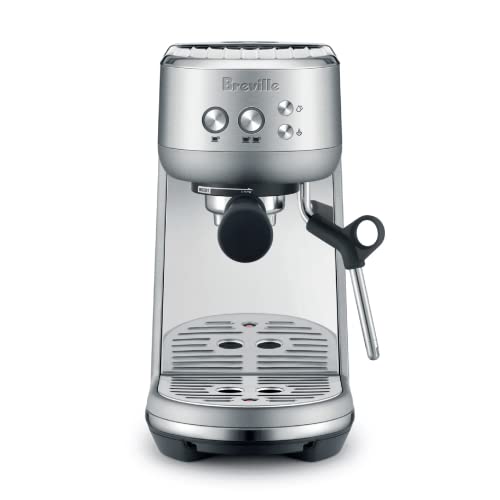
Breville Bambino
Breville lists PID temperature control with its ThermoJet heater, which it says is ready in 3 seconds, and a 54 mm portafilter.
Buy it if: Stable temperature without having to manage it. Skip it if: You want to set the temperature yourself.
- Type
- Semi-automatic
- Heating
- ThermoJet
- PID
- Yes
- Portafilter
- 54 mm
- Milk
- steam wand (manual milk texturing)
- Heat-up (maker)
- ready to start in 3 seconds
- Water tank
- 47 fl.oz
- Size (W×D×H)
- 7.7 x 12.6 x 12.2 in (W x D x H, Breville listing on Amazon)
- Weight
- 10.42 lb
Specs: Breville US product page (2026-11-09); Breville listing on Amazon (2026-11-09)
3. Single boiler with PID added
Rancilio Silvia with PID
Rancilio's listing describes digital temperature management 'to-the-degree' with quicker recovery, programmable infusion and a shot timer, on a solid brass boiler. It is the PID version of the long-running Silvia.
Buy it if: Buyers who want a single-boiler machine and the temperature control it lacks without PID. Skip it if: You want Rancilio's own spec page; the PID model is listed only on Amazon.
- Type
- Semi-automatic
- Heating
- solid brass boiler
- PID
- Yes
- Milk
- steam wand
- Water tank
- 2L (listing title)
- Size (W×D×H)
- 13.5 x 11 x 9.5 in (Amazon item dimensions: height, length, width)
Specs: Rancilio listing on Amazon (2026-11-09)
- Profitec
4. Compact boiler with PID
Profitec GO
Profitec lists a 0.3 l insulated brass boiler with PID-controlled temperature, a fast heat-up mode of about 7 minutes, a pump pressure gauge and an adjustable expansion valve.
Buy it if: A traditional single-boiler machine that is only 8.3 in wide. Skip it if: You want instant starts; boilers take minutes, not seconds.
- Type
- Semi-automatic
- Heating
- single boiler
- PID
- Yes
- Milk
- steam wand (rotary valve)
- Heat-up (maker)
- Fast Heat-Up Mode: Heating phase approx. 7 min
- Water tank
- Water tank with 2.8 l volume; brass boiler 0.3 l
- Size (W×D×H)
- 210 x 362 x 381 mm without portafilter (W x D x H); 210 x 410 x 381 mm with filter holder
- Weight
- 28.4 lb
Specs: Profitec GO product page (Wayback Machine snapshot 2026-08-27) (2026-11-09); Profitec GO 2.0 product page (2026-11-09)
5. Two PIDs, two boilers
Rancilio Silvia Pro X
Rancilio gives the Silvia Pro X two PID controllers, one for a 0.3 l coffee boiler and one for a 1 l steam boiler, plus soft infusion adjustable from 0 to 6 seconds and a shot timer.
Buy it if: Milk-drink households that want each boiler held at its own temperature. Skip it if: Counter depth is short: Rancilio lists it at 16.5 in deep.
- Type
- Semi-automatic
- Heating
- dual boiler
- PID
- Yes
- Milk
- multi-directional stainless steel steam wand
- Water tank
- Integrated 2 litre water tank
- Size (W×D×H)
- 250 x 420 x 390 mm / 9.8 x 16.5 x 15.3 in (W x D x H)
- Weight
- 44.1 lb
Specs: Rancilio Silvia Pro X product page (2026-11-09); Rancilio Home Line catalogue 2022 (ranciliogroup.com, technical specifications) (2026-11-09); Rancilio listing on Amazon (2026-11-09)
6. PID on boiler and group
Breville Dual Boiler
Breville lists a dedicated espresso boiler with digital PID and a PID-controlled heated group head, separate steam boiler, and dual 15 bar pumps for brewing and steaming at once.
Buy it if: Temperature control on both the boiler and the group, with a 58 mm portafilter. Skip it if: You also need a grinder within the same budget.
- Type
- Semi-automatic
- Heating
- dual boiler
- PID
- Yes
- Portafilter
- 58 mm
- Milk
- steam wand (powerful manual milk texturing)
- Water tank
- 84 oz
- Size (W×D×H)
- 37.9 x 40.3 x 37.1 cm (W x D x H)
- Weight
- 28.35 lb
Specs: Breville US product page (2026-11-09); Breville listing on Amazon (2026-11-09)



Product prices and availability are accurate as of 2026-11-13 and are subject to change. Amazon prices are for the colour linked. Specs are the makers' published figures; we don't test machines.
Every machine, spec by spec
Filter, then tick up to four for a side-by-side view. A dash means the maker doesn't publish that figure.
| Compare | Machine | Price | Heating | PID | Grinder | Portafilter | Width | Heat-up |
|---|---|---|---|---|---|---|---|---|
| CASABREWS 3700 Essential | $99.99 | Flash heater | Yes | — | 51 mm | — | — | |
| CASABREWS CM5418 | $139.99 | Flash heater | Yes | — | 51 mm | — | — | |
| CASABREWS 5418 PRO | $161 | Flash heater | Yes | — | — | 5.9 in | 5 seconds | |
| CASABREWS Ultra | $209.99 | Flash heater | Yes | — | 58 mm | 10.31 in | — | |
| Breville Bambino | $299.95 | Flash heater | Yes | — | 54 mm | 7.7 in | ready to start in 3 seconds | |
| CASABREWS Marenza | $299.99 | Flash heater | Yes | Yes | 58 mm | 8.9 in | — | |
| Breville Bambino Plus | $499.95 | Flash heater | Yes | — | 54 mm | 7.7 in | ready to start in 3 seconds | |
| De'Longhi La Specialista Touch | $599.95 | Flash heater | Yes | Yes | — | 11.22 in | — | |
| De'Longhi La Specialista Opera | $599.95 | Flash heater | Yes | Yes | — | — | — | |
| Breville Barista Express | $684.29 | Flash heater | Yes | Yes | 54 mm | — | — | |
| Breville Barista Express Impress | $789.99 | Flash heater | Yes | Yes | 54 mm | — | — | |
| Breville Barista Pro | $832 | Flash heater | Yes | Yes | 54 mm | — | 3 second heat up time | |
| Breville Barista Touch | $999.95 | Flash heater | Yes | Yes | 54 mm | — | 3 second heat up time | |
| Profitec GO | $1199 | Single boiler | Yes | — | — | 8.3 in | Fast Heat-Up Mode: Heating phase approx. 7 min | |
| Rancilio Silvia with PID | $1199 | Single boiler | Yes | — | — | — | — | |
| Breville Dual Boiler | $1599.95 | Dual boiler | Yes | — | 58 mm | 14.9 in | — | |
| Meraki Meraki Espresso Machine (dual boiler with grinder) | $1999 | Dual boiler | Yes | Yes | 58 mm | 14.6 in | — | |
| Rancilio Silvia Pro X | $2195 | Dual boiler | Yes | — | — | 9.8 in | — | |
| Profitec Pro 600 | — | Dual boiler | Yes | — | — | 12 in | — |
19 of 45 machines shown, lowest price first. Prices: Amazon as of 2026-11-13, or the maker's list price where the machine isn't on Amazon.
Specs are each maker's published figures (source linked per machine). Amazon prices as of 2026-11-13; prices change. We earn from qualifying purchases; it never affects matching or order, which is lowest price first.
How is PID different from a thermostat?
A thermostat is a switch. When the boiler cools past a lower limit the heater comes on at full power, and when it passes an upper limit it goes off. The water temperature swings between those limits, and where in that swing you start a shot changes how hot the water is.
A PID controller measures the temperature continuously and adjusts how much the heater runs, reacting to how far off target the water is, how long it has been off, and how fast it is changing. Quick Mill says a PID machine 'keeps temperature within a tighter range, reacts quickly to thermal changes and allows more predictable extractions'.
Quick Mill adds the caveat that matters for buyers: PID 'is not the only way a machine can achieve stable brewing conditions'. Machines without PID 'typically use thermostats or advanced electronic temperature controls'. So a missing PID on a spec sheet is a reason to look closer, not proof the machine is unstable. Breville, for its part, describes PID in its manuals as being 'for increased temperature stability'.
It helps to put the standards in Fahrenheit, since most US machines display it. INEI's 88 °C ± 2 for water leaving the group works out to about 187 to 194 °F. The heritage SCAA range is 195 to 205 °F. CASABREWS's four Ultra settings (194, 198, 201 and 205 °F) sit across the SCAA range, and the 200 °F that Breville says the Barista Express delivers falls inside it. A PID is what lets a machine hold a chosen point in that window shot after shot, rather than drifting across it.
PID control - how crucial of a feature is it?
— Thread title, r/espresso (owners debating whether PID is worth paying for)
Which machines have PID? 28 machines checked
This table covers 28 of the portafilter machines in our catalogue, sorted by whether the maker states PID. 'Not stated' means the maker's own page and listing do not use the word. It does not mean the machine has no electronic control: Lelit, for example, describes an electronic LCC controller with a brew temperature function on the Bianca without calling it PID, and Breville lets you set the Oracle Jet's temperature in 1-degree steps.
Read the 'temperature setting' column with the PID column. A machine can state PID and give you no way to change the target, as on the Bambino, where Breville lists no temperature setting among its controls. Another can skip the word PID and still give fine control, as on the Oracle Jet. If you want to experiment with temperature for different roasts, that column matters more than the label.
| Machine | PID | Heater (maker's term) | Temperature setting published | Band |
|---|---|---|---|---|
| CASABREWS 3700 Essential | Stated | Thermoblock | No | About $110 |
| CASABREWS CM5418 | Stated | Thermoblock single boiler | No | About $140 |
| CASABREWS 5418 PRO | Stated | Flashheat thermoblock | No | About $180 |
| CASABREWS Ultra | Stated | Thermoblock single boiler | 4 settings, 194–205 °F | About $210 |
| CASABREWS Marenza | Stated | Thermoblock | Temperature shown on display | About $300 |
| Breville Bambino | Stated | ThermoJet | No | About $300 |
| Breville Bambino Plus | Stated | ThermoJet | No | About $500 |
| De'Longhi La Specialista Touch | Stated | Advanced Thermoblock | No (4 milk temperatures listed) | About $600 |
| De'Longhi La Specialista Opera | Stated | Advanced Thermoblock | No | About $600 |
| Breville Barista Express | Stated | Thermocoil | Breville states 200 °F delivery | About $700 |
| Breville Barista Express Impress | Stated | Thermocoil | No | About $800 |
| Breville Barista Pro | Stated | ThermoJet | No | About $850 |
| Breville Barista Touch | Stated | ThermoJet | No | About $1,000 |
| Profitec GO | Stated | Single boiler, 0.3 l brass | PID-controlled | About $1,200 |
| Breville Dual Boiler | Stated (boiler and group) | Dual boiler | No | About $1,500 |
| Meraki Espresso Machine | Stated (with heated group) | Dual boiler | No | About $2,000 |
| Profitec Pro 600 | Stated (both boilers) | Dual boiler | Each boiler adjustable | No new list price |
| Rancilio Silvia Pro X | Stated (two controllers) | Dual boiler | No | No list price |
| Rancilio Silvia with PID | Stated | Solid brass boiler | 'To-the-degree' control | No list price |
| Breville Barista Touch Impress | Not stated | ThermoJet | No | About $1,500 |
| Breville Oracle Jet | Not stated | ThermoJet | 1-degree steps | About $2,000 |
| Fellow Espresso Series 1 | Not stated | Boosted Boiler (heater + boiler + group heater) | No | About $1,500 |
| Lelit Bianca | Not stated (LCC controller) | Dual boiler | Brew Temperature function | About $3,000 |
| De'Longhi Stilosa | Not stated | Stainless steel boiler | No | About $150 |
| De'Longhi Classic | Not stated | Thermoblock | No | About $150 |
| Chefman CraftBrew | Not stated | Not published | No | About $130 |
| Gaggia Classic E24 | Not stated | Lead-free brass boiler | No | No US list price read |
| Rancilio Silvia | Not stated | Insulated boiler | No | No list price |
Where PID matters most, by boiler type
How much a PID helps depends on what it is controlling. Makers describe four layouts, and PID plays a different part in each:
Temperature is not the only thing a machine can control electronically. Fellow describes programmable pressure profiling with controlled pre-infusion on the Espresso Series 1, and Lelit's Bianca has a paddle for manual control of water flow. Those features shape the shot in a different way from PID, so do not read a missing PID label as a missing feature set.
- Single boiler (Rancilio Silvia, Gaggia Classic E24, Profitec GO): one boiler brews and steams, so you wait while it moves between temperatures, per Quick Mill and Profitec. A PID holds the brew temperature steady between those switches. This is where adding PID changes the most, which is why the Silvia is sold in both versions.
- Heat exchanger: one boiler is held at steam temperature and brew water is flash-heated through a tube. La Marzocco's R&D manager says that brew temperature is indirectly influenced by boiler pressure and needs a cooling flush before each shot. A PID here controls the boiler, not the brew water directly.
- Dual boiler (Breville Dual Boiler, Rancilio Silvia Pro X, Profitec Pro 600): separate brew and steam boilers each hold their own temperature, per Profitec and La Marzocco. Breville states PID on the Dual Boiler's espresso boiler; Rancilio and Profitec state PID on both boilers.
- Thermoblock and flow-through heaters (CASABREWS, Breville ThermoJet and Thermocoil, De'Longhi Advanced Thermoblock): water is heated as it flows, which Quick Mill says allows very fast heat-up. Breville and CASABREWS state PID on these heaters; it governs how the heater responds during the shot.
Is PID worth it for a beginner?
It is less of a decision than it used to be, because PID now appears at the bottom of the market. CASABREWS states it on machines from about $110, and Breville on every Bambino. For a beginner, the practical benefit is one less variable: if the temperature is held for you, a sour or bitter shot points to grind, dose or time, which Baratza's dialling-in guide says to fix by grinding finer if a shot is sour and fast and coarser if it is bitter and slow.
Where PID does not help is the grinder. A PID machine with stale pre-ground coffee in a single-wall basket will still run fast and sour, because grind size controls flow and extraction, as Breville's manual explains. If you have to choose between a PID upgrade and a capable grinder, the grinder usually changes the shot more.
Forum opinion is split, which is why the question keeps coming up. One r/espresso post is titled 'Espresso machines without a PID is actually pretty ridiculous.'; another asks 'How important is a PID really for a newb?'. Both are owner opinions. The makers' position is clearer: Quick Mill calls PID 'a strong indicator of precision and consistency' and not the only route to it.
PID also does not decide how long you wait. Warm-up depends on the heater: Breville says its ThermoJet machines are ready in 3 seconds and CASABREWS says the 5418 PRO heats in 5, while Profitec gives about 7 minutes for the GO's boiler in its fast heat-up mode and Fellow says the Espresso Series 1 is ready in two minutes or less. All of those machines are listed with PID or electronic control. Our types of espresso machines guide sets every maker's published heat-up claim side by side.
Filter for PID machines in your budget
The comparison tool below is preset to show each PID espresso machine in our catalogue, meaning machines whose makers state PID. Add a budget or a boiler type to narrow it, and compare two or three side by side with today's prices. To see machines without stated PID too, untick the PID filter.
When you read any spec sheet, look for three things: the word PID or a named electronic controller, whether you can set the temperature and in what steps, and the heater type. A machine that lists a temperature setting, like the CASABREWS Ultra's four steps or the Oracle Jet's 1-degree steps, gives you control whether or not it uses the word PID.
Questions people ask
- What does PID mean on an espresso machine?
- Proportional-Integral-Derivative: a controller that adjusts the heater continuously to keep brew temperature close to a set point, rather than switching fully on and off like a thermostat.
- Is PID necessary for good espresso?
- No. Quick Mill says PID is not the only way a machine can achieve stable brewing conditions. It helps most on single-boiler machines and when you change roasts.
- What is the cheapest espresso machine with PID?
- In our catalogue, the CASABREWS 3700 Essential, at around $110, is the cheapest machine whose maker states PID.
- Does the Gaggia Classic have PID?
- Gaggia's page for the Classic E24 does not state PID, so our table lists it as not stated. It uses a lead-free brass boiler and a 58 mm portafilter, per Gaggia.
- Does the Breville Bambino have PID?
- Yes. Breville lists PID temperature control for both the Bambino and the Bambino Plus.
- Can I add a PID to my espresso machine?
- Kits exist for some single-boiler machines, and 'pid espresso machine kit' is a common search. Fitting one means working on mains wiring inside the machine and may affect the maker's warranty, so check the maker's terms first.
Sources & further reading
- Quick Mill, Guide to choosing an espresso machine (PID, boiler types; 2026-11-09)
- Profitec, Which Profitec espresso machine suits you (boiler types; 2026-11-09)
- La Marzocco USA, The importance of dual boilers (2026-11-09)
- Breville Barista Express BES875 instruction book (PID, grind size; 2026-11-09)
- Breville Dual Boiler BES920 instruction book (PID; 2026-11-09)
- INEI, A Brief Guide to the Italian Certified Espresso (archive copy, read 2026-11-09)
- SCA 25 Magazine, Defining the Ever-Changing Espresso (2026-11-09)
- Baratza, Dialing in Espresso (2026-11-09)
- Rancilio Silvia with PID, Rancilio listing on Amazon (2026-11-09)
- Rancilio Silvia Pro X product page (2026-11-09)
- Profitec GO product page (Wayback Machine snapshot, read 2026-11-09)
- CASABREWS Ultra product page (2026-11-09)
- Lelit Bianca PL162T product page (2026-11-09)
- r/espresso thread: PID control - how crucial of a feature is it? (owner opinions)
- r/espresso thread: How important is a PID really for a newb? (owner opinions)
Read next
- How to Make Espresso
How to make espresso at home, step by step: INEI and SCAA parameters, an 18 g in, 36 g out recipe, grind, tamp and timing, and fixes when a shot tastes off.
- Breville Espresso Machines
Breville espresso machines compared rung by rung, Bambino to Oracle Jet: heater, PID, grinder settings, milk system and height from Breville's own spec pages.
- Dual Boiler Espresso Machines
Dual boiler espresso machine guide: how two boilers differ from single boiler, heat exchanger and thermoblock heating, with boiler sizes and 4 machines.
- Gaggia Classic Pro vs Bambino
Gaggia Classic Pro vs Bambino: a single brass boiler and 58 mm portafilter against a 3-second ThermoJet with PID and 54 mm baskets. Specs, workflow, verdict.
- Types of Espresso Machines
Types of espresso machines sorted two ways: who grinds, tamps and stops the shot, and how the water is heated. A step-by-step table and 45 machines counted.
Part of How to Make Espresso. Back to the EspressoGoods home page.

EspressoGoods editors · Editorial team
EspressoGoods' catalogue and guides are compiled by the site's editorial team from espresso machine and grinder makers' own product pages, spec sheets and manuals, plus standards bodies such as the Istituto Nazionale Espresso Italiano. We do not test machines or taste shots, and we never claim to: every spec on the site links to the page it came from.
About this site · How pages are checked · Last updated November 9, 2026
As an Amazon Associate, EspressoGoods earns from qualifying purchases. It costs you nothing extra and never decides which machines we list.
EspressoGoods is an independent site. It is not affiliated with Breville, De'Longhi, Gaggia, Rancilio, Philips, Ninja or any other maker. Brand names and trademarks belong to their owners. Specs are the makers' published figures; check the maker's page before you buy.