Guide
Gaggia Classic Pro vs Bambino: Which First Machine Fits How You Make Coffee?
By EspressoGoods editors · Updated 2026-11-08 · How we research
We may earn a commission when you buy through links on this page.
Short answer
Pick the Breville Bambino if you want speed and simplicity: Breville says it is ready in 3 seconds, it has PID and it costs around $300. Pick the Gaggia Classic Pro if you want a traditional single boiler, a 58 mm portafilter that fits the most common accessory size, and a heavier all-metal machine, and you don't mind waiting for the boiler.
Two people type gaggia classic pro vs bambino into a search bar, and they usually want different things. The first wants espresso fast on a weekday morning with as few decisions as possible. The second wants a machine that feels like a café machine in miniature: metal, a big portafilter, a boiler, and room to tinker. Both machines sell for well under $600, and both come up again and again in owners' forums as first-machine candidates.
This page puts the Breville Bambino against the two Gaggia listings that carry the Classic Pro design today, using only the makers' published specs, then walks through how a morning's coffee goes on each. We don't test machines ourselves; where a maker publishes nothing for a spec, we say so.
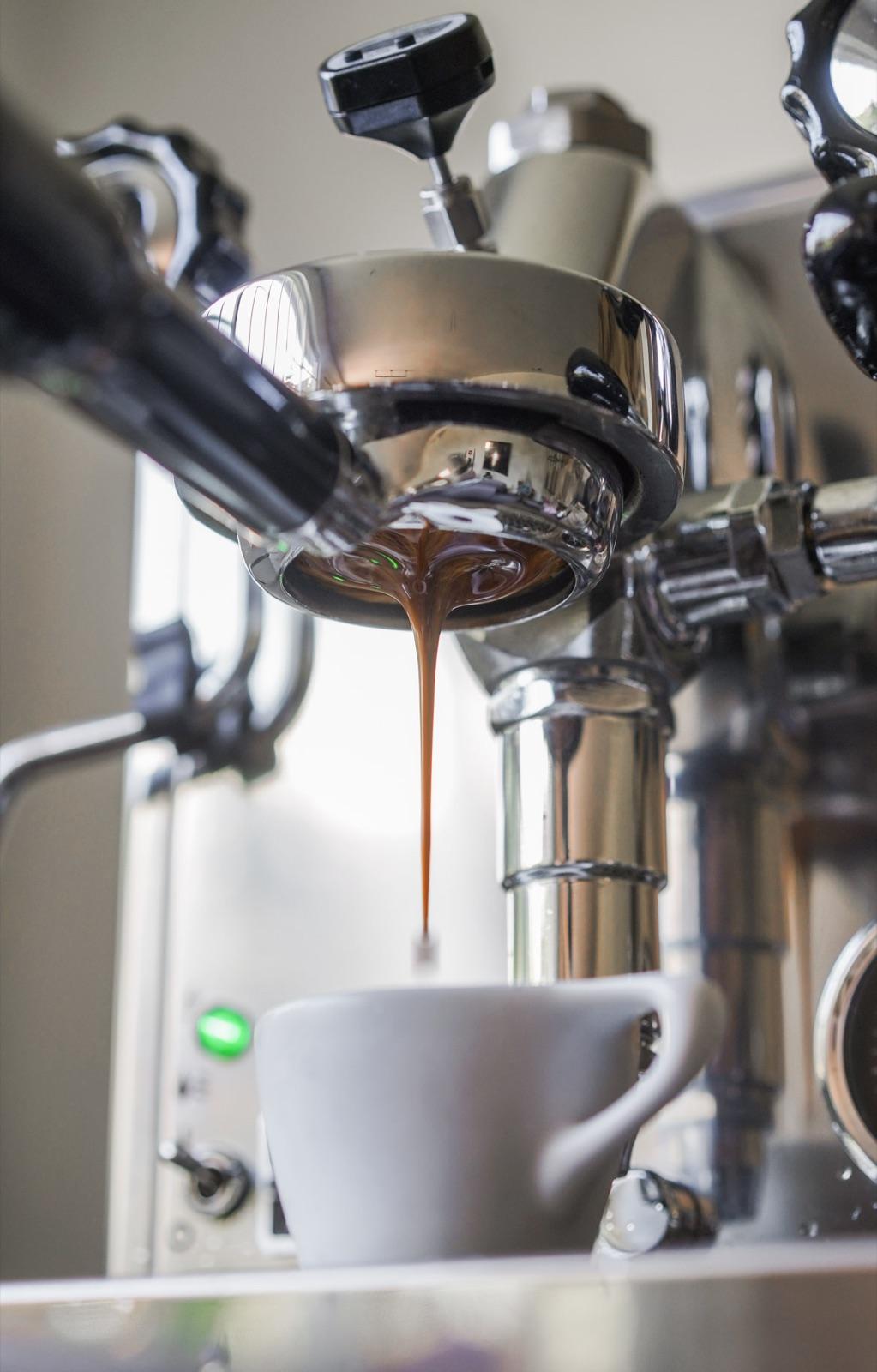
The machines compared
1. Faster, simpler, cheaper
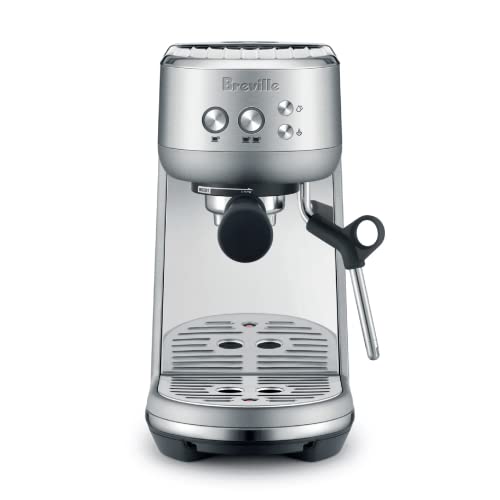
Breville Bambino
Breville lists a ThermoJet heater it says is ready to start in 3 seconds, PID temperature control, a low-pressure pre-infusion leading into 9 bar extraction, and a 54 mm portafilter with single and dual wall baskets. It is 7.7 in wide and 10.42 lb, with a manual steam wand.
Buy it if: First-time buyers who want espresso and the odd milk drink quickly. Skip it if: You want 58 mm accessories or a heavy, all-metal machine.
- Type
- Semi-automatic
- Heating
- ThermoJet
- PID
- Yes
- Portafilter
- 54 mm
- Milk
- steam wand (manual milk texturing)
- Heat-up (maker)
- ready to start in 3 seconds
- Water tank
- 47 fl.oz
- Size (W×D×H)
- 7.7 x 12.6 x 12.2 in (W x D x H, Breville listing on Amazon)
- Weight
- 10.42 lb
Specs: Breville US product page (2026-11-09); Breville listing on Amazon (2026-11-09)
2. Classic Pro, current E24 version
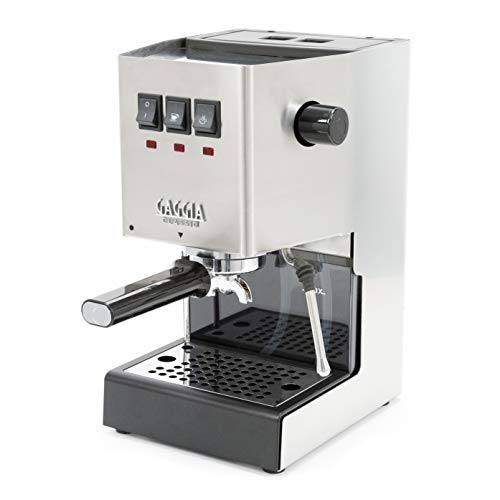
Gaggia Classic E24
Gaggia lists a lead-free brass boiler, an upgraded lead-free brass group, a professional stainless steel 58 mm filter holder, a 3-way solenoid valve and a professional steam wand. It comes with one pressurised basket and two traditional ones, a 2.1 l tank and a 15 bar nominal pump, and Gaggia says it is designed and made in Italy.
Buy it if: Buyers who want a traditional single boiler with standard 58 mm baskets. Skip it if: You want PID or a published warm-up time; Gaggia's pages we read give neither.
- Type
- Semi-automatic
- Heating
- boiler (lead-free brass)
- Portafilter
- 58 mm
- Milk
- professional stainless-steel steam wand
- Water tank
- 2,1 lt
- Size (W×D×H)
- 20 x 35,5 x 27 cm (l x h x d)
- Weight
- 17.9 lb
Specs: Gaggia product page, Classic E24 (gaggia.com, Tech Info tab) (2026-11-09); Gaggia listing on Amazon (2026-11-09)
3. Classic Pro, Evo Pro listing
Gaggia Classic Evo Pro
Gaggia's Amazon listing for the RI9380/48 lists a solid steel housing made in Italy, a stainless steel 58 mm commercial portafilter, a commercial three-way solenoid valve and a commercial steam wand. Gaggia's US manual for the RI9380 confirms it heats with a boiler.
Buy it if: The same Classic Pro design if this listing has the better price or colour. Skip it if: You want a full maker spec sheet; Gaggia's US store could not be read and the listing omits tank size and wattage.
- Type
- Semi-automatic
- Heating
- boiler
- Portafilter
- 58 mm
- Milk
- commercial steam wand
- Size (W×D×H)
- 14.2 x 9.5 x 8 in (Amazon item dimensions: height, length, width)
- Weight
- 19.2 lb
Specs: Gaggia listing on Amazon (2026-11-09); Gaggia Classic Pro RI9380 US operating instructions (gaggia.com) (2026-11-09)
4. If you want the milk done for you
Breville Bambino Plus
The Bambino's sibling adds an automatic steam wand with adjustable milk temperature and texture, on the same ThermoJet, PID and 54 mm portafilter, with a larger 64 fl oz tank. It lists at around $500.
Buy it if: Latte drinkers who don't want to learn steaming. Skip it if: You enjoy texturing milk by hand.
- Type
- Semi-automatic
- Heating
- ThermoJet
- PID
- Yes
- Portafilter
- 54 mm
- Milk
- automatic steam wand (hands-free milk texturing)
- Heat-up (maker)
- ready to start in 3 seconds
- Water tank
- 64 fl.oz
- Size (W×D×H)
- 7.7 x 12.5 x 12.2 in (W x D x H, Breville listing on Amazon: 'a width of 7.7 inches')
- Weight
- 10.91 lb
Specs: Breville US product page (2026-11-09); Breville listing on Amazon (2026-11-09)


Product prices and availability are accurate as of 2026-11-13 and are subject to change. Amazon prices are for the colour linked. Specs are the makers' published figures; we don't test machines.
Which Gaggia is the 'Classic Pro'?
Gaggia's US operating instructions cover the Classic Pro as model RI9380, and two listings in that family are on sale in the US today: the Classic Evo Pro (RI9380/48) and the Classic E24 (RI9380/46). Both list a 58 mm portafilter, a boiler, a 3-way solenoid valve and a commercial-style steam wand. Our catalogue records them separately because their sources differ: Gaggia's global page publishes a full spec sheet for the E24, while the Evo Pro's figures come from Gaggia's Amazon listing and US manual, because Gaggia's US store refused requests on our read date.
On our latest Amazon price check, both Gaggias were in a band around $450 to $550, against around $300 for the Bambino. The cards on this page show today's figures, so check them before deciding.
Spec by spec
Here are the differences that change how you use each machine, from the makers' own pages. Where the Evo Pro listing is silent, the cell says not published.
One row looks contradictory and isn't. Gaggia's E24 page gives a 15 bar nominal pump, while the Evo Pro listing talks about 9 bar extractions. Those are two different numbers: the first is what the pump can reach, the second is the pressure at which espresso is brewed. INEI's certified espresso uses 9 bar ± 1, the heritage SCAA definition 9–10 atmospheres, and Breville's own Bambino listing gives a 15 bar pump alongside 9 bar extraction. So neither machine gains anything from its 15 bar figure; it is a pump rating, not a brewing pressure.
| Spec | Breville Bambino | Gaggia Classic E24 | Gaggia Classic Evo Pro |
|---|---|---|---|
| Heating | ThermoJet (flow-through) | Lead-free brass boiler | Boiler |
| Temperature control | PID | Not stated on the pages we read | Not stated on the pages we read |
| Warm-up (maker) | Ready to start in 3 seconds | Not published | Not published |
| Portafilter | 54 mm | 58 mm | 58 mm |
| Baskets included | 1 and 2 cup, single and dual wall | 1 pressurised (1 or 2 cups) + traditional 1 cup and 2 cup | Not published |
| Pressure (maker's words) | Pre-infusion, then 9 bar extraction; 15 bar pump | 15 bar (nominal) pump | 9 bar espresso extractions |
| Steam | Manual steam wand | Professional stainless steel steam wand | Commercial steam wand |
| Water tank | 47 fl oz | 2.1 l | Not published |
| Width x depth x height | 7.7 x 12.6 x 12.2 in | 7.9 x 10.6 x 14.0 in | Height 14.2 in (other axes unclear) |
| Weight | 10.42 lb | 17.9 lb | 19.2 lb |
| Power | 1560 W | 1350 W | Not published |
Heating: a 3-second ThermoJet against a brass boiler
The Bambino heats water as it flows, which Breville calls ThermoJet and says makes the machine ready to start in 3 seconds. Quick Mill, an Italian maker, describes this family of flow-through heaters in general as giving very fast heat-up. Breville adds PID temperature control, which Quick Mill defines as electronic regulation of the heating element to minimise temperature swings.
The Gaggia heats a brass boiler. That is the traditional approach, and Gaggia publishes no warm-up time for either listing, so we can't give you one. What a single boiler implies is clear from makers who sell them: Profitec explains that you switch a single boiler from brewing temperature to steaming temperature, which suits people who make milk drinks occasionally. The pages we read for the Gaggia don't mention PID.
Lack of PID on a spec sheet is not automatically a problem. Quick Mill notes that PID is not the only way a machine can achieve stable brewing conditions, and that machines without it typically use thermostats. It does mean the Bambino gives you the shorter route to a ready machine on the published evidence.
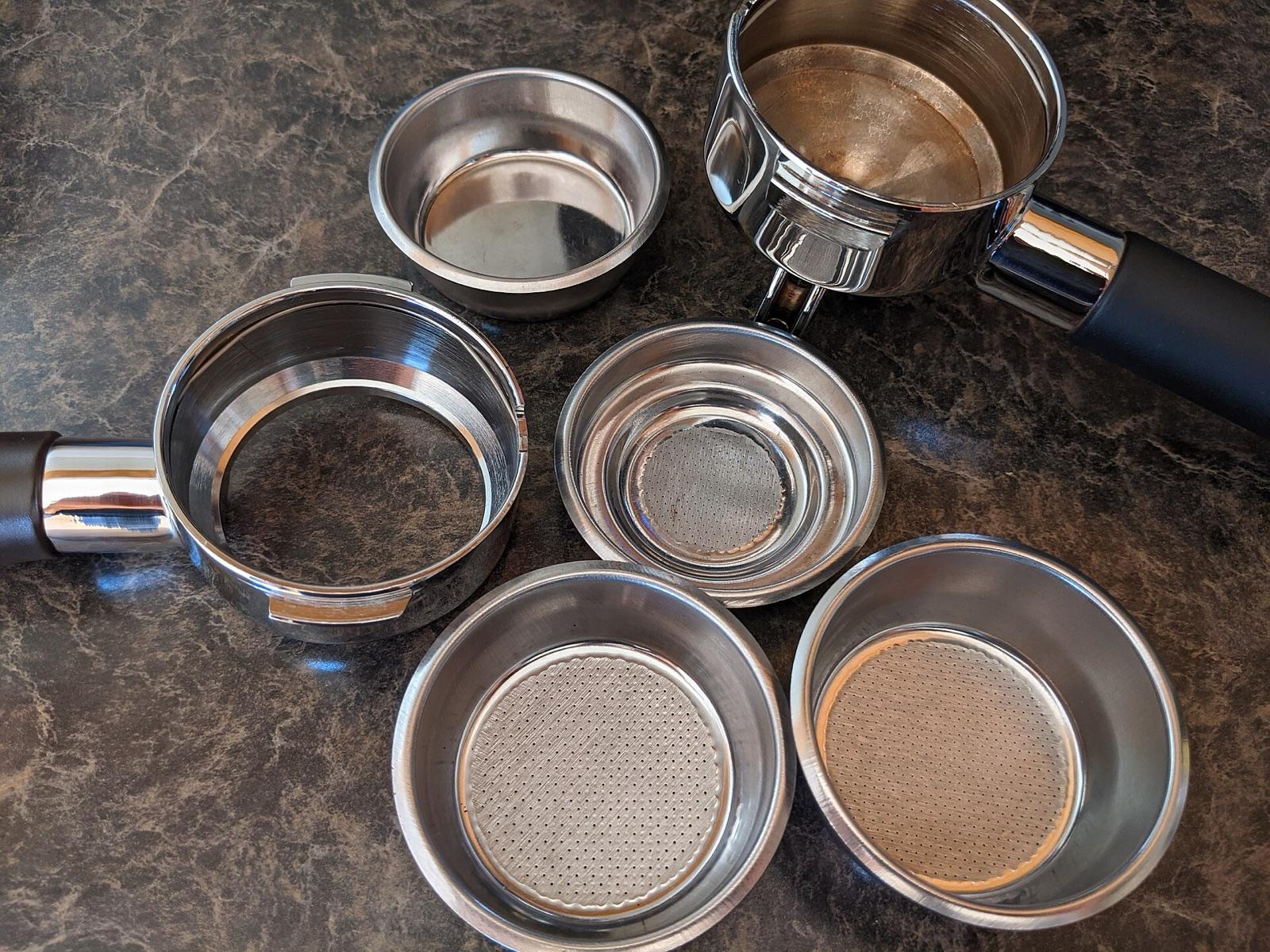
54 mm versus 58 mm, and what the baskets mean
The portafilter size decides which tampers, baskets and dosing cups fit. In our catalogue 58 mm is listed on nine machines across six brands (Breville, Fellow, Meraki, Lelit, Gaggia and CASABREWS), while 54 mm appears on seven machines, all Breville. Grinder makers cater to both: Breville's Smart Grinder Pro includes 50–54 mm and 58 mm cradles, and Fellow says the Opus 2's dosing cup fits 54 mm and 58 mm portafilters.
Basket type matters more for a first-time buyer than size. Breville says dual wall (pressurised) baskets are for pre-ground coffee, because they regulate pressure and help extraction regardless of grind, dose, tamp or freshness, while single wall baskets suit freshly ground beans and let you experiment. Both machines give you a choice. The Bambino ships with single and dual wall baskets in 1 and 2 cup sizes; Breville's manual gives the 1 cup basket as 8–11 g and the 2 cup as 16–19 g. The Classic E24 ships with one pressurised basket for 1 or 2 cups and two traditional baskets.
The common failure is the same on either machine: pre-ground supermarket coffee in a single wall basket runs too fast and tastes thin. If you don't own an espresso grinder yet, start on the pressurised basket.
Tank size follows the same pattern as the heating. The Classic E24's 2.1 l tank works out to about 71 fl oz (2.1 × 33.8), half as much again as the Bambino's 47 fl oz, so you refill the Gaggia less often. Whichever you choose, Breville's advice on water applies broadly: it warns against demineralised or distilled water in its machines and tells owners to descale when the machine's indicator asks rather than on a fixed calendar.
A weekday latte on each machine
Specs become clearer when you walk through the routine. These steps follow each maker's published features; they are not timings, because Gaggia publishes none.
For straight espresso the gap narrows. Skip the steam steps and the Gaggia's routine is simply wait, dose, brew; the Bambino's is dose and brew. The real time difference is the boiler warm-up, which Gaggia does not publish and which you can soften with a smart plug or by switching the machine on before you grind. Where the Gaggia asks for more patience is the latte: one boiler doing two jobs means a second wait every time you want milk.
- Bambino: switch on. Breville says the ThermoJet is ready to start in 3 seconds.
- Bambino: grind about 18 g into the 54 mm basket (Breville's figure), tamp, lock in.
- Bambino: press the 2 cup button. Breville lists a low-pressure pre-infusion followed by 9 bar extraction.
- Bambino: press steam and texture the milk by hand with the steam wand.
- Gaggia: switch on and wait for the boiler to reach brew temperature; Gaggia publishes no time for this.
- Gaggia: dose into the 58 mm basket, tamp, lock in and brew.
- Gaggia: switch to steam and wait while the same boiler heats to steam temperature, as Profitec describes for single boilers.
- Gaggia: texture the milk with the steam wand.
Counter, height and weight
Both machines are narrow: 7.7 in for the Bambino and 7.9 in for the Classic E24. Height is where they differ. The E24 is 14.0 in tall and the Evo Pro 14.2 in, against 12.2 in for the Bambino, so measure the gap under your wall cabinets, then add room to lift the lid and refill the tank.
Weight tells you about construction. Gaggia describes a solid steel housing on the Evo Pro listing, and the two Gaggias weigh 17.9 lb and 19.2 lb, close to double the Bambino's 10.42 lb. A heavier machine stays put when you lock in the portafilter; a lighter one is easier to move to clean behind. Neither figure says anything about how long a machine lasts, and no maker publishes a lifespan.
Which buyer gets which machine
Go back to the two people in the introduction. The weekday-speed buyer should get the Bambino: it is ready almost at once by Breville's account, controls temperature with PID, costs less, and the dual wall baskets forgive pre-ground coffee while you sort out a grinder.
The tinkerer should get the Gaggia Classic Pro, in whichever listing is cheaper on the day. It gives you the 58 mm size used across more brands in our catalogue, a traditional brass boiler and a heavier, metal-bodied machine, at the cost of waiting for the boiler and switching it between brew and steam.
Count the grinder in the budget too, because neither machine has one built in. A Bambino plus an espresso grinder such as the Baratza Encore ESP (around $200) lands near $500 in total; a Gaggia plus the same grinder lands near $650 to $750 at today's Gaggia prices. If that extra $150 to $250 would otherwise buy a better grinder, the Bambino with the better grinder deserves a serious look for the same money.
Either way, the grinder matters as much as the machine. Both reward a grinder sold for espresso; see our grinder guide for the Bambino before you spend the difference.
Questions people ask
- Is the Gaggia Classic Pro better than the Breville Bambino?
- Not better, different. The Gaggia offers a brass boiler, a 58 mm portafilter and a heavier build; the Bambino offers a 3-second heat-up (per Breville), PID and a lower price. Choose on how you make coffee, not on which is better in general.
- Does the Gaggia Classic Pro have PID?
- The Gaggia pages and listing we read for the Classic E24 and Classic Evo Pro do not mention PID. The Bambino lists PID temperature control. Quick Mill, an espresso machine maker, notes that machines without PID typically use thermostats or other electronic controls, and that PID is not the only route to stable brewing temperature.
- What is the difference between the Gaggia Classic E24 and the Classic Evo Pro?
- Both are in Gaggia's RI9380 Classic Pro family with a 58 mm portafilter, a boiler, a 3-way solenoid valve and a commercial-style steam wand. Gaggia's E24 page adds an upgraded lead-free brass group and a lead-free brass boiler. The Evo Pro's full spec sheet was not readable, so we can't list every difference.
Sources & further reading
- Breville Bambino BES450 product page (2026-11-09)
- Breville Bambino BES450 US instruction book (2026-11-09)
- Breville Bambino listing on Amazon (2026-11-09)
- Breville Bambino Plus BES500 product page (2026-11-09)
- Breville Barista Express BES875 instruction book (2026-11-09)
- Gaggia Classic E24 product page, Tech Info (2026-11-09)
- Gaggia Classic E24 listing on Amazon (2026-11-09)
- Gaggia Classic Evo Pro listing on Amazon (2026-11-09)
- Gaggia Classic Pro RI9380 US operating instructions (2026-11-09)
- Quick Mill, guide to choosing an espresso machine (2026-11-09)
- Profitec, which Profitec espresso machine suits you (2026-11-09)
- Breville Smart Grinder Pro BCG820 product page (2026-11-09)
- Fellow Opus 2 product page (2026-11-09)
Read next
- Breville Espresso Machines
Breville espresso machines compared rung by rung, Bambino to Oracle Jet: heater, PID, grinder settings, milk system and height from Breville's own spec pages.
- Bambino vs Bambino Plus
Breville Bambino vs Bambino Plus: same ThermoJet heater, PID and 54 mm baskets; the Plus adds automatic milk texturing and a larger tank. See the full diff.
- Bambino Plus vs Barista Express
Bambino Plus vs Barista Express as complete setups: machine plus the grinder you'd need, in price bands that follow live prices, and Breville's specs compared.
- Grinder for Breville Bambino
Grinder for Breville Bambino and Bambino Plus owners: six espresso grinders checked against its 54 mm portafilter and baskets, plus two grinders to avoid.
- Espresso Machines Under $500
Best espresso machine under 500 dollars, with the grinder counted: five ways to split $500, spec tables from makers' pages, and the 54 vs 58 mm question.
- Best Espresso Machine for Beginners
Best espresso machine for beginners, chosen in six steps: forgiving baskets, a grinder budget, push-button or manual, and makers' specs with live prices.
Part of Breville Espresso Machines. Back to the EspressoGoods home page.

EspressoGoods editors · Editorial team
EspressoGoods' catalogue and guides are compiled by the site's editorial team from espresso machine and grinder makers' own product pages, spec sheets and manuals, plus standards bodies such as the Istituto Nazionale Espresso Italiano. We do not test machines or taste shots, and we never claim to: every spec on the site links to the page it came from.
About this site · How pages are checked · Last updated November 8, 2026
As an Amazon Associate, EspressoGoods earns from qualifying purchases. It costs you nothing extra and never decides which machines we list.
EspressoGoods is an independent site. It is not affiliated with Breville, De'Longhi, Gaggia, Rancilio, Philips, Ninja or any other maker. Brand names and trademarks belong to their owners. Specs are the makers' published figures; check the maker's page before you buy.