Guide
Best Espresso Machine for Lattes, Matched to Your Milk Routine
By EspressoGoods editors · Updated 2026-11-09 · How we research
We may earn a commission when you buy through links on this page.
Short answer
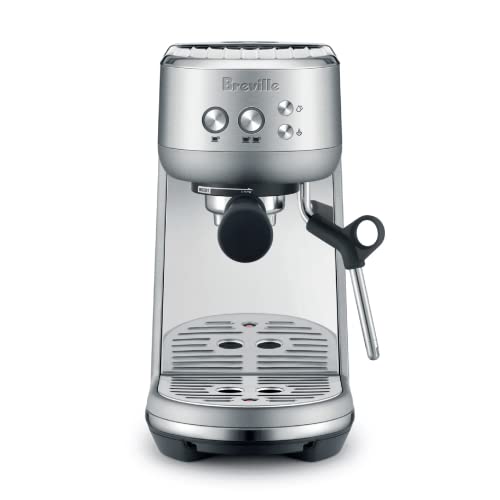
For most latte drinkers, the Breville Bambino Plus is the pick: an automatic steam wand with adjustable milk temperature and texture in a 7.7 in wide body. Want the grinder built in? The De'Longhi La Specialista Touch adds one with an automatic wand. For back-to-back lattes, the Breville Dual Boiler brews and steams at once. For push-button drinks, choose a super-automatic with a milk carafe.
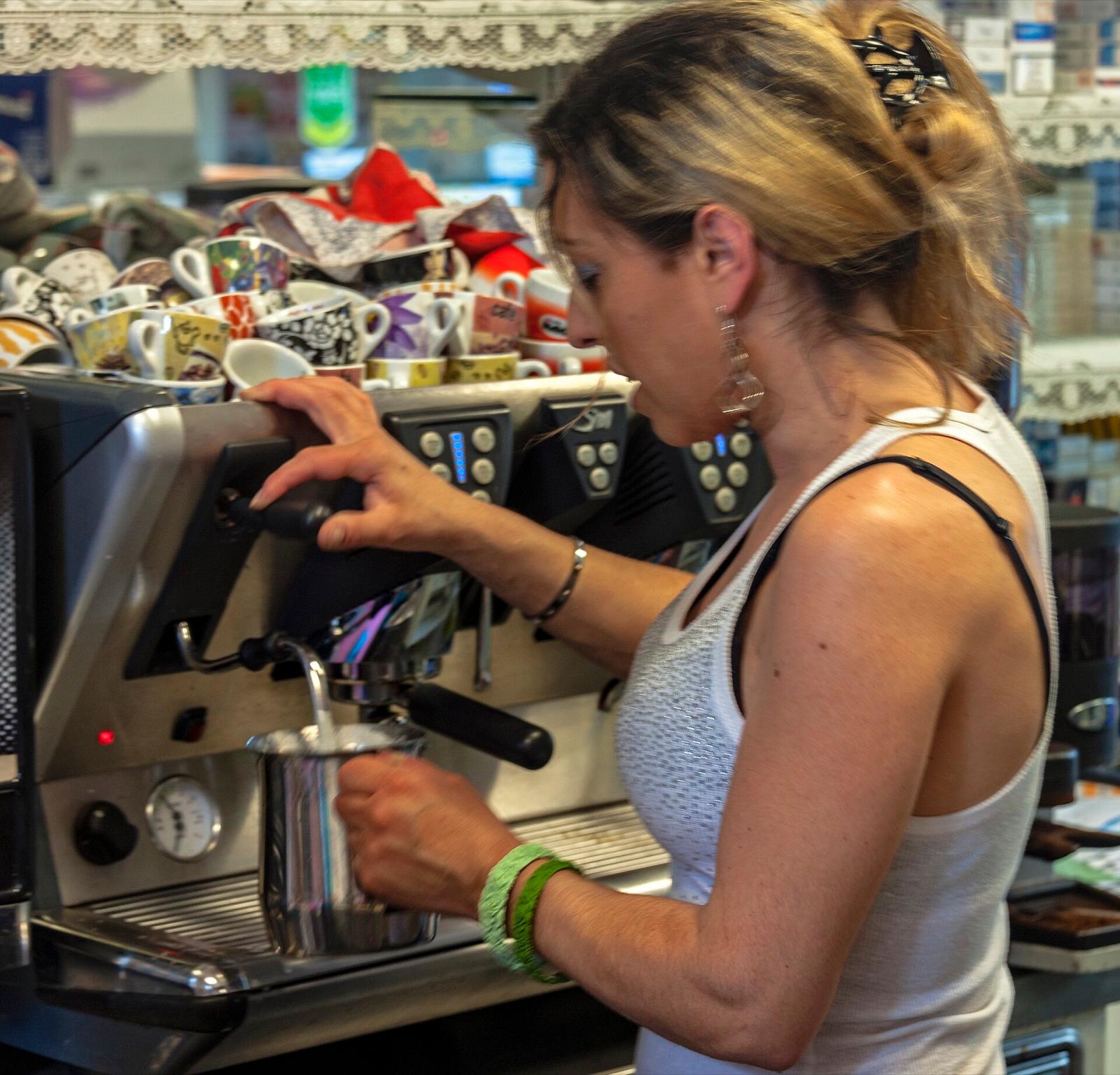
It is 7:15, two people want a latte before leaving, and the one doing the making is choosing the best espresso machine for lattes by the minute: grind, pull a shot, steam a jug of milk, pour, then do it again. In that routine the espresso takes about half a minute. The milk takes longer, and it is where machines differ most.
So this page ranks machines by how they make milk first, then by how quickly they can do it twice. A cappuccino as INEI defines it is 25 ml of espresso and 100 ml of steam-foamed milk; a latte uses more milk still. The finder below is preset to machines with a milk system, and every spec quoted comes from the maker's page, manual or the maker's own Amazon listing, read on 9 November 2026.
Latte machines by milk system
1. Best overall for lattes
Breville Bambino Plus
Breville's automatic steam wand textures milk hands-free, with adjustable milk temperature and texture level. ThermoJet heating with a stated 3-second start, PID control and a 64 fl oz tank, in a body 7.7 in wide.
Buy it if: One or two lattes a morning without learning to steam, around $500. Skip it if: You make several drinks in a row and hate waiting between brewing and steaming.
- Type
- Semi-automatic
- Heating
- ThermoJet
- PID
- Yes
- Portafilter
- 54 mm
- Milk
- automatic steam wand (hands-free milk texturing)
- Heat-up (maker)
- ready to start in 3 seconds
- Water tank
- 64 fl.oz
- Size (W×D×H)
- 7.7 x 12.5 x 12.2 in (W x D x H, Breville listing on Amazon: 'a width of 7.7 inches')
- Weight
- 10.91 lb
Specs: Breville US product page (2026-11-09); Breville listing on Amazon (2026-11-09)
2. Automatic wand plus built-in grinder
De'Longhi La Specialista Touch
De'Longhi lists an automatic steam wand with 5 froth levels, 4 temperatures and a manual setting, a conical burr grinder with 15 settings, Advanced Thermoblock heating and PID control. Its 10 presets include latte, flat white and latte macchiato.
Buy it if: Bean-to-latte in one appliance, around $600. Skip it if: Counter width is tight; it is 11.22 in wide and 15.87 in tall.
- Type
- Semi-automatic
- Heating
- Advanced Thermoblock
- PID
- Yes
- Grinder
- conical burr, 15 grind settings
- Milk
- automatic steam wand (5 froth levels, 4 temperatures, plus manual setting)
- Water tank
- 57.48 oz
- Size (W×D×H)
- 14.37 x 11.22 x 15.87 in (maker label: L x W x H)
- Weight
- 31.97 lb
Specs: De'Longhi US product page (2026-11-09); De'Longhi listing on Amazon (2026-11-09)
3. Best for back-to-back lattes
Breville Dual Boiler
Two boilers with a dedicated, PID-controlled espresso boiler, and Breville says its dual 15 bar pumps allow simultaneous milk texturing and espresso extraction. The steam wand is manual and the tank holds 84 oz.
Buy it if: Households making three or more milk drinks at a time. Skip it if: You want the milk done for you or have less than 15 in of width to spare.
- Type
- Semi-automatic
- Heating
- dual boiler
- PID
- Yes
- Portafilter
- 58 mm
- Milk
- steam wand (powerful manual milk texturing)
- Water tank
- 84 oz
- Size (W×D×H)
- 37.9 x 40.3 x 37.1 cm (W x D x H)
- Weight
- 28.35 lb
Specs: Breville US product page (2026-11-09); Breville listing on Amazon (2026-11-09)
4. Touchscreen with automatic milk
Breville Barista Touch
A built-in grinder, a touch screen with pre-programmed café drinks, hands-free milk texturing and ThermoJet heating that Breville says reaches temperature in 3 seconds. Single and dual-wall baskets are included.
Buy it if: Latte drinkers who want guided, repeatable drinks, around $1,000. Skip it if: You want to brew and steam at the same moment; it is one heater.
- Type
- Semi-automatic
- Heating
- ThermoJet
- PID
- Yes
- Grinder
- integrated conical burr grinder, hardened steel conical burrs, 30 precision grind settings
- Portafilter
- 54 mm
- Milk
- automatic steam wand (hands-free milk texturing)
- Heat-up (maker)
- 3 second heat up time
- Water tank
- 67 oz; bean hopper 1/2 lb
- Size (W×D×H)
- 15.7 x 12.6 x 12.4 in as printed on Breville's page; Breville's own Amazon listing gives a 15.7 in height, so the page's first figure is the height and its W×D labelling can't be relied on
- Weight
- 21.8 lb
Specs: Breville US product page (2026-11-09); Breville listing on Amazon (2026-11-09)
5. Push-button latte, super-automatic
Philips 3300 Series LatteGo
A fully automatic machine with Philips's LatteGo milk system (0.26 l milk container), a built-in grinder with 12 settings and five drinks including latte macchiato. Philips says LatteGo can be cleaned in as little as 10 seconds.
Buy it if: No tamping, no steaming: press a button and get a milk drink. Skip it if: You want control over grind, dose and milk texture.
- Type
- Super-automatic (bean to cup)
- Grinder
- built-in grinder, 12 grinder settings (ceramic per Amazon listing); 275 g bean container
- Milk
- LatteGo milk system (0.26 l milk container)
- Water tank
- 1,8 l
- Size (W×D×H)
- Product Length 371 mm, Width 246 mm, Height 433 mm (as published)
- Weight
- 17.6 lb
Specs: Philips US product specifications (EP3341/50, Philips product data API for the US page) (2026-11-09); Philips US product page (2026-11-09); Philips listing on Amazon (2026-11-09)
6. Lowest-cost manual wand
De'Longhi Stilosa
A manual steam wand, a stainless steel boiler and a 15 bar pump rating. De'Longhi lists cappuccino, latte and flat white as drinks you make with the frother. You will learn to steam by hand.
Buy it if: Trying lattes at home for under $200. Skip it if: You want temperature control or automatic milk.
- Type
- Semi-automatic
- Heating
- Boiler (stainless steel boiler)
- Milk
- manual steam wand
- Water tank
- 33.81 oz
- Size (W×D×H)
- 13.5 x 8.07 x 11.22 in (maker label: L x W x H)
- Weight
- 10.99 lb
Specs: De'Longhi US product page (2026-11-09); De'Longhi listing on Amazon (2026-11-09)


Product prices and availability are accurate as of 2026-11-13 and are subject to change. Amazon prices are for the colour linked. Specs are the makers' published figures; we don't test machines.
Find the espresso machines that fit you
Answer what matters; leave the rest on “Any”. Matching uses only the makers' published specs and today's prices.
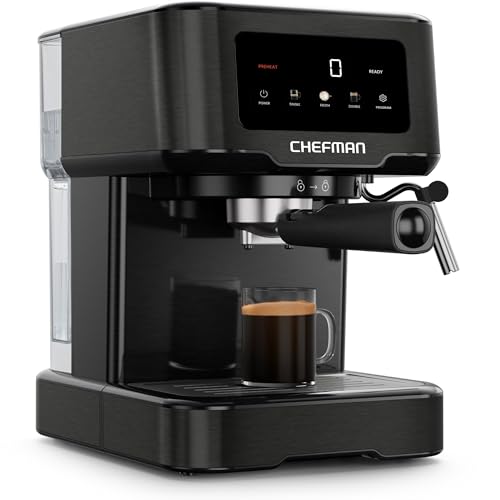
Chefman CraftBrew Espresso Machine
Semi-automatic · 8.9 in wide
Why it fits: Milk: steam wand
CASABREWS 3700 Essential
Semi-automatic · Flash heater · 51 mm
Why it fits: Milk: steam wand
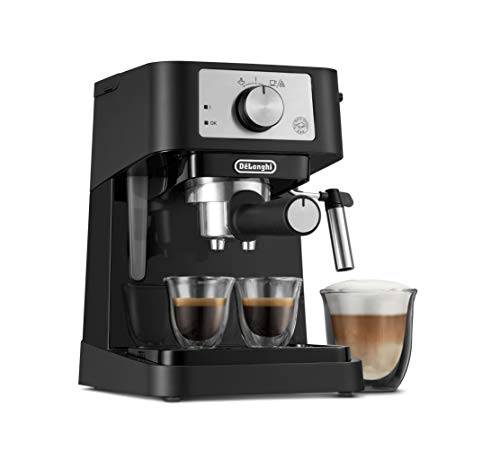
De'Longhi Stilosa
Semi-automatic · Single boiler · 8.07 in wide
Why it fits: Milk: manual steam wand
CASABREWS CM5418
Semi-automatic · Flash heater · 51 mm
Why it fits: Milk: steam wand
De'Longhi Classic (sold on Amazon as Classic Signature)
Semi-automatic · Flash heater · 9 in wide
Why it fits: Milk: adjustable steam wand (dual mode frother)
CASABREWS 5418 PRO
Semi-automatic · Flash heater · 5.9 in wide
Why it fits: Milk: steam wand
CASABREWS Ultra
Semi-automatic · Flash heater · 58 mm · 10.31 in wide
Why it fits: Milk: steam wand (10mm)
Breville Bambino
Semi-automatic · Flash heater · 54 mm · 7.7 in wide
Why it fits: Milk: steam wand (manual milk texturing)
CASABREWS Marenza
Semi-automatic · Flash heater · 58 mm · 8.9 in wide
Why it fits: Milk: steam wand
Philips 2200 Series (classic milk frother)
Super-automatic · 9.7 in wide
Why it fits: Milk: Classic Milk Frother
Ninja Luxe Café Mini
Semi-automatic · 12.2 in wide
Why it fits: Milk: manual steam wand
Gaggia Classic E24
Semi-automatic · Single boiler · 58 mm · 7.9 in wide
Why it fits: Milk: professional stainless-steel steam wand




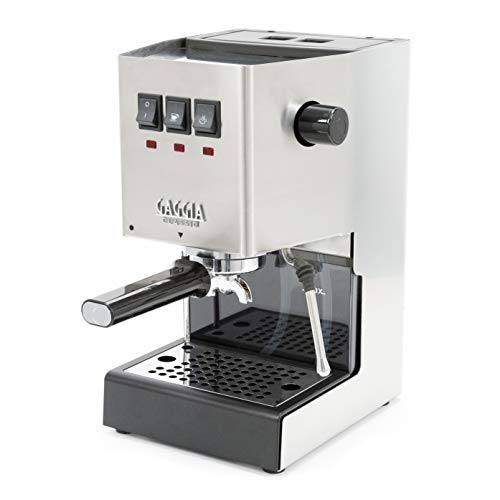
Showing the 12 lowest-priced matches. Narrow an answer, or open the compare tab to see all of them.
Near misses (one requirement short)
- Wacaco Minipresso GR $46.90 · missing: milk frothing
- Flair Classic $159 · missing: milk frothing
- Flair 49 PRO $359 · missing: milk frothing
- Jura E4 $1399 · missing: milk frothing
Specs are each maker's published figures (source linked per machine). Amazon prices as of 2026-11-13; prices change. We earn from qualifying purchases; it never affects matching or order, which is lowest price first.
Four ways a home machine makes milk
Makers describe their milk systems in different words, but they fall into four groups. Which group suits you depends on whether you want to learn a skill or press a button.
- Manual steam wand. A pipe that blows steam into a jug you hold. You control air and temperature by hand. Examples: De'Longhi Stilosa, Breville Bambino, Breville Dual Boiler.
- Automatic steam wand. The same wand, but the machine controls steaming and stops at a set temperature and texture. Examples: Breville Bambino Plus and Barista Touch ("hands-free milk texturing"), De'Longhi La Specialista Touch (5 froth levels, 4 temperatures).
- Milk carafe or container. Milk is drawn from a jug and frothed inside the machine, then dispensed into the cup. Examples: Philips LatteGo, De'Longhi LatteCrema, Jura's HP3 milk system on the E8.
- Whisk plus steam. Ninja's Dual Froth System on the Luxe Café Premier combines a spinning whisk with an automatic steamer, with presets for steamed milk, thin froth, thick froth and cold foam.
Milk systems compared
The table sets the milk system next to the heating system, because the two together decide how a machine handles a latte. Widths are included because many latte machines carry a grinder and get wide quickly.
Read the heating column with the boiler section below in mind. Among the machines whose makers name a heating system, only the Breville Dual Boiler has separate brew and steam boilers; the rest use one heater, so they brew and then steam. Ninja and Philips do not publish the heater type. That is fine for one or two drinks. The grinder column matters for a different reason: a built-in grinder saves buying a second appliance, but it also makes the machine bigger. Breville's product pages and its own Amazon listings disagree on which figure is the width for the Barista Touch models, so the table leaves their widths out rather than guess.
| Machine | Milk system (maker's words) | Heating | Grinder | Width |
|---|---|---|---|---|
| De'Longhi Stilosa | manual steam wand | stainless steel boiler | No | 8.07 in |
| Breville Bambino Plus | automatic steam wand (hands-free) | ThermoJet | No | 7.7 in |
| De'Longhi La Specialista Touch | automatic steam wand, 5 froth levels, 4 temperatures, manual setting | Advanced Thermoblock | Yes, 15 settings | 11.22 in |
| Ninja Luxe Café Premier | Dual Froth System: whisk plus automatic steamer, 4 presets | not published | Yes, 25 settings | 13.39 in |
| Breville Barista Touch | automatic steam wand (hands-free) | ThermoJet | Yes | not reliably published |
| Breville Barista Touch Impress | Auto MilQ: dairy, almond, oat and soy settings | ThermoJet | Yes, 30 settings | not reliably published |
| Philips 3300 LatteGo | LatteGo milk container, 0.26 l | not published | Yes, 12 settings | 9.7 in |
| De'Longhi Magnifica Start | LatteCrema Hot (automatic, carafe) | Thermoblock | Yes | - |
| Breville Dual Boiler | manual steam wand | dual boiler | No | 14.9 in |
Two lattes in a row: why boiler type matters
Brewing espresso and steaming milk need different temperatures. Profitec, a German machine maker, explains that on a single boiler you switch the machine from brewing temperature to steaming temperature, which makes single boilers best suited to people who make milk drinks only occasionally. Thermoblock and ThermoJet machines heat on demand, so the switch is quicker, but they still do one job at a time.
A heat exchanger keeps one boiler at steam temperature and flash-heats brew water through a tube, so you can brew and steam together. La Marzocco notes that the brew temperature then depends indirectly on boiler pressure and needs a cooling flush before each shot. A dual boiler holds a separate brew boiler and steam boiler, each at its own temperature, so both jobs run at once without that flush.
For one latte a day, none of this matters much. For a household making three or four drinks every morning, it is the difference between a smooth routine and a queue.
Automatic milk or manual: pick by your mornings
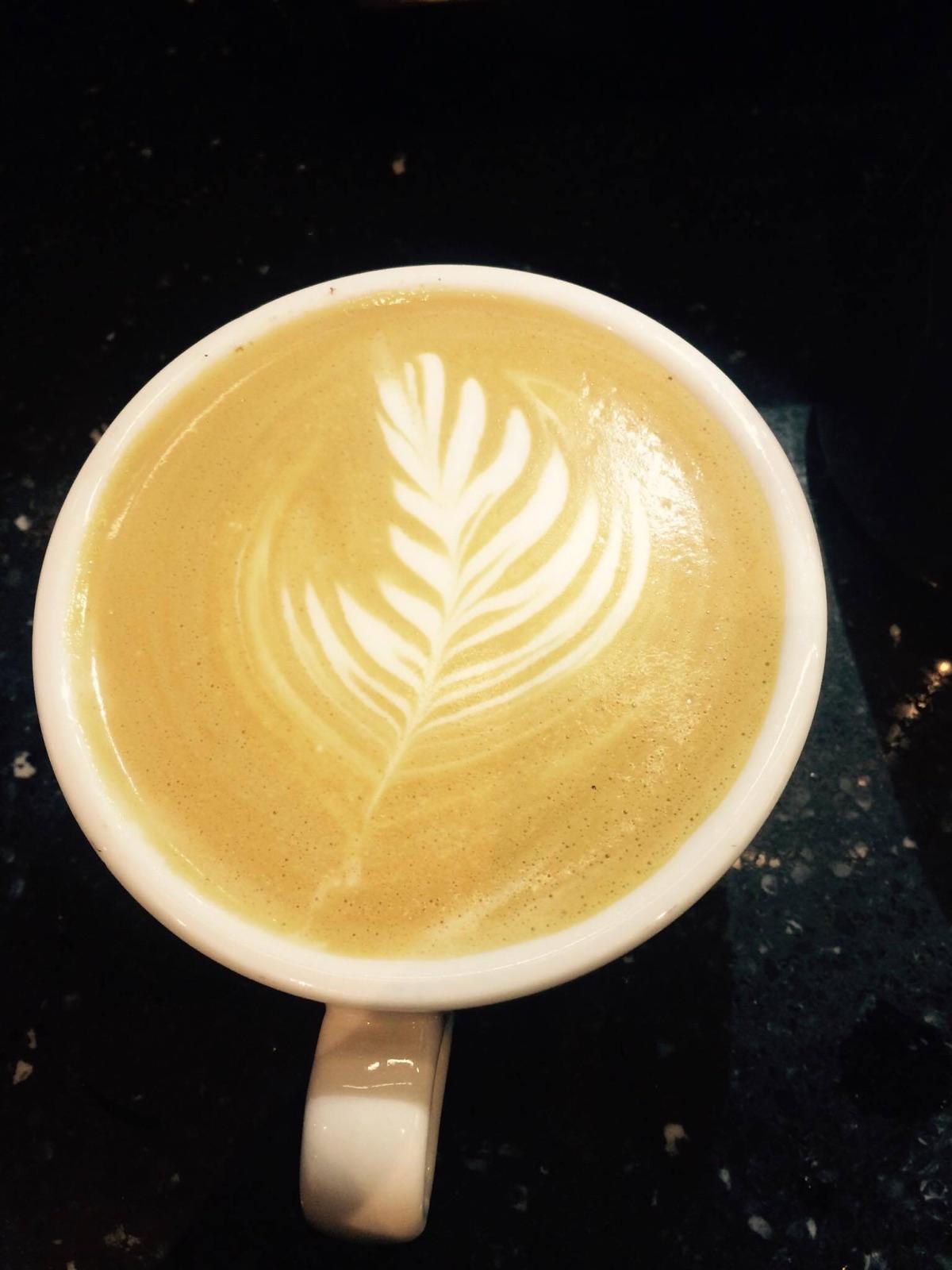
Automatic wands and carafes give repeatable milk without practice, which suits busy households and anyone who has never steamed before. Manual wands take practice but let you adjust texture for each drink and pour latte art. The right choice depends less on skill than on how much attention you want to give each cup.
It also helps to count drinks honestly. If most mornings are one latte for one person, the time saved by a carafe or an automatic wand is small, and a cheaper manual machine may be all you need. If the machine serves a family or guests at weekends, automatic milk and a larger tank save real time every week.
- You want a latte in under two minutes with no learning: a super-automatic with a carafe, such as the Philips 3300 LatteGo or a De'Longhi with LatteCrema.
- You want real espresso control but no milk skills: an automatic steam wand, such as the Bambino Plus or La Specialista Touch.
- You want to learn to steam and pour: a manual wand, from the Stilosa at the bottom to the Breville Dual Boiler at the top.
- You make cold foam or plant-milk drinks often: check the maker's presets. Breville's Auto MilQ lists dairy, almond, oat and soy settings, and Ninja lists a cold foam preset.
Bambino crew! Standard works fine for us.
— r/espresso user (owner's opinion), thread "$1000 Budget - Best espresso machine for milk based drinks", April 2023 (quoted from the thread's search snippet)
Oat, almond and soy milk
Plant milks are where automatic systems differ most. Breville's Barista Touch Impress and Oracle Jet name separate Auto MilQ settings for dairy, almond, oat and soy. De'Longhi's Eletta Explore lists hot and cold foam from its LatteCrema system, and Ninja's Dual Froth System offers thin froth, thick froth and cold foam presets.
Other makers do not name plant milks in the specs we read, which does not mean the machine cannot froth them; it means the maker does not promise a dedicated setting. With a manual wand, you adjust by hand for any milk, which is one reason latte drinkers who switch between dairy and oat often prefer one.
Don't forget the espresso under the milk
Milk softens a shot but does not hide a bad one. If the coffee is under-extracted it tastes sour through the milk; over-extracted, bitter. Breville describes the cause plainly: grind too coarse and water flows too fast, too fine and it barely flows at all.
That makes baskets and grinder part of a latte decision. Breville says dual-wall baskets are for pre-ground coffee and regulate pressure regardless of grind, while single-wall baskets need freshly ground beans. The Bambino Plus ships with both, so you can start with pre-ground coffee. Machines with a built-in grinder, such as the La Specialista Touch and Barista Touch, solve the grinder question in one purchase, at the cost of a bigger machine.
A practical rule for latte drinkers on a budget: put the money into the milk system and the grinder before anything else. A machine with a good automatic wand and a pressurised basket will make a better latte with pre-ground coffee than an expensive machine with a grinder that cannot go fine enough. Our grinder hub lists the grinders their makers sell for espresso, so you can check before you buy.
Cleaning the milk system
Every milk system has to be cleaned after use, and makers compete on how easy that is. Philips says its LatteGo can be cleaned in as little as 10 seconds. De'Longhi lists "one touch automatic cleaning" for the LatteCrema Hot system on the Magnifica Start, and Jura lists automatic one-touch milk system cleaning on the E8. These are maker claims, not measurements of ours.
A steam wand needs a wipe and a short purge of steam after each jug. Carafe systems have more parts that touch milk, which is the trade for not steaming by hand. If you make lattes daily, check whether the carafe or its parts go in the dishwasher; De'Longhi lists removable, dishwasher-safe components on the Magnifica Start.
Whatever the system, milk left in a wand or line dries quickly, so cleaning straight after the drink takes far less effort than cleaning later. If the person making the lattes is often in a hurry, the system that is quickest to rinse is usually the one that stays clean.
Which latte machine for which budget
Under $200, the De'Longhi Stilosa is a manual-wand machine that makes lattes once you learn to steam. Around $500, the Breville Bambino Plus is the simplest route to good milk without practice, and it is small. Around $600, the La Specialista Touch and Ninja Luxe Café Premier add a grinder and automatic milk; the Ninja also brews drip coffee and cold brew.
Around $1,000, the Barista Touch adds a touchscreen and grinder to Breville's automatic wand. At about $1,500, the Breville Dual Boiler is the machine for households making many milk drinks, with brewing and steaming at the same time. Super-automatics such as the Philips 3300 LatteGo sit outside this ladder: check the live price on the card and choose them if pressing a button matters more to you than control.
Two specs are worth a second look at any price. Tank size sets how often you refill: 84 oz on the Dual Boiler, 64 fl oz on the Bambino Plus and 33.81 oz on the Stilosa. And width sets where the machine can live: the Bambino Plus is 7.7 in wide, while the grinder-equipped Barista Touch stands 15.7 in tall, and Breville's own figures for its width conflict, so measure before you buy.
Whichever you choose, the best espresso machine for lattes is the one whose milk system matches how much attention you want to give the milk. Use the finder above with the milk filter on, then add your budget and counter width.
Questions people ask
- What type of espresso machine is best for lattes?
- For one or two lattes at a time, a machine with an automatic steam wand, such as the Breville Bambino Plus, is the easiest. For many drinks in a row, a dual boiler lets you brew and steam at once. For push-button lattes, a super-automatic with a milk carafe.
- Do I need a dual boiler to make lattes?
- No. A single boiler or thermoblock machine makes lattes fine; you brew first and then steam. Profitec notes single boilers suit people who make milk drinks only occasionally, so a dual boiler pays off mainly when you make several in a row.
- Is an automatic milk frother as good as a steam wand?
- It is more repeatable and needs no practice. A manual wand gives more control over texture, which matters for latte art and for switching between dairy and plant milks. Automatic steam wands, like Breville's, sit between the two.
- What is the difference between a latte and a cappuccino machine?
- There is none: the same machine makes both. INEI defines a cappuccino as 25 ml of espresso and 100 ml of steam-foamed milk; a latte uses more milk with less foam, which you control with the wand or the machine's milk presets.
Sources & further reading
- Breville Bambino Plus BES500 product page (2026-11-09)
- Breville Dual Boiler BES920 product page (2026-11-09)
- Breville Barista Touch BES880 product page (2026-11-09)
- Breville Barista Touch Impress BES881 product page (2026-11-09)
- Breville Barista Express BES875 instruction book: baskets and grind (2026-11-09)
- De'Longhi La Specialista Touch EC9455M product page (2026-11-09)
- De'Longhi Magnifica Start product page (2026-11-09)
- De'Longhi Eletta Explore product page (2026-11-09)
- De'Longhi Stilosa EC260BK product page (2026-11-09)
- Philips Series 3300 LatteGo EP3341/50 specifications (2026-11-09)
- Ninja listing on Amazon, Luxe Café Premier (2026-11-09)
- JURA E8 product page, specifications (2026-11-09)
- Profitec, Which Profitec espresso machine suits you (2026-11-09)
- La Marzocco USA, The importance of dual boilers (2026-11-09)
- Quick Mill, Guide to choosing an espresso machine: PID (2026-11-09)
- INEI, The Certified Italian Cappuccino (archived, read 2026-11-09)
- r/espresso thread "$1000 Budget - Best espresso machine for milk based drinks" (owner opinions, 2023)
Read next
- Bambino vs Bambino Plus
Breville Bambino vs Bambino Plus: same ThermoJet heater, PID and 54 mm baskets; the Plus adds automatic milk texturing and a larger tank. See the full diff.
- Dual Boiler Espresso Machines
Dual boiler espresso machine guide: how two boilers differ from single boiler, heat exchanger and thermoblock heating, with boiler sizes and 4 machines.
- Super-Automatic Espresso Machines
Super automatic espresso machine picks from De'Longhi, Philips, Jura and Ninja, compared by milk system, grind steps, cleaning claims and counter depth.
- Espresso Machines With a Grinder
Espresso machine with grinder or separate grinder? Compare cost, counter width, grind settings and repair risk, with built-in models from $300 to $2,000.
- Types of Espresso Machines
Types of espresso machines sorted two ways: who grinds, tamps and stops the shot, and how the water is heated. A step-by-step table and 45 machines counted.
- De'Longhi Stilosa
DeLonghi Stilosa specs from De'Longhi's own page: single boiler, 15 bar pump, manual wand, no PID or size listed. What it can't do, and the rivals to weigh.
Part of Types of Espresso Machines. Back to the EspressoGoods home page.
EspressoGoods editors · Editorial team
EspressoGoods' catalogue and guides are compiled by the site's editorial team from espresso machine and grinder makers' own product pages, spec sheets and manuals, plus standards bodies such as the Istituto Nazionale Espresso Italiano. We do not test machines or taste shots, and we never claim to: every spec on the site links to the page it came from.
About this site · How pages are checked · Last updated November 9, 2026
As an Amazon Associate, EspressoGoods earns from qualifying purchases. It costs you nothing extra and never decides which machines we list.
EspressoGoods is an independent site. It is not affiliated with Breville, De'Longhi, Gaggia, Rancilio, Philips, Ninja or any other maker. Brand names and trademarks belong to their owners. Specs are the makers' published figures; check the maker's page before you buy.