Guide
Manual Espresso Machine: What a Lever Press Gives You, and What You Give Up
By EspressoGoods editors · Updated 2026-11-08 · How we research
We may earn a commission when you buy through links on this page.
Short answer
Choose one if you drink straight espresso and don't mind boiling a kettle for every shot; you give up milk steam and quick back-to-back shots. The Flair Classic (around $160) is the entry lever press; the Flair 49 PRO adds a 6–9 bar gauge and a 49 mm basket.
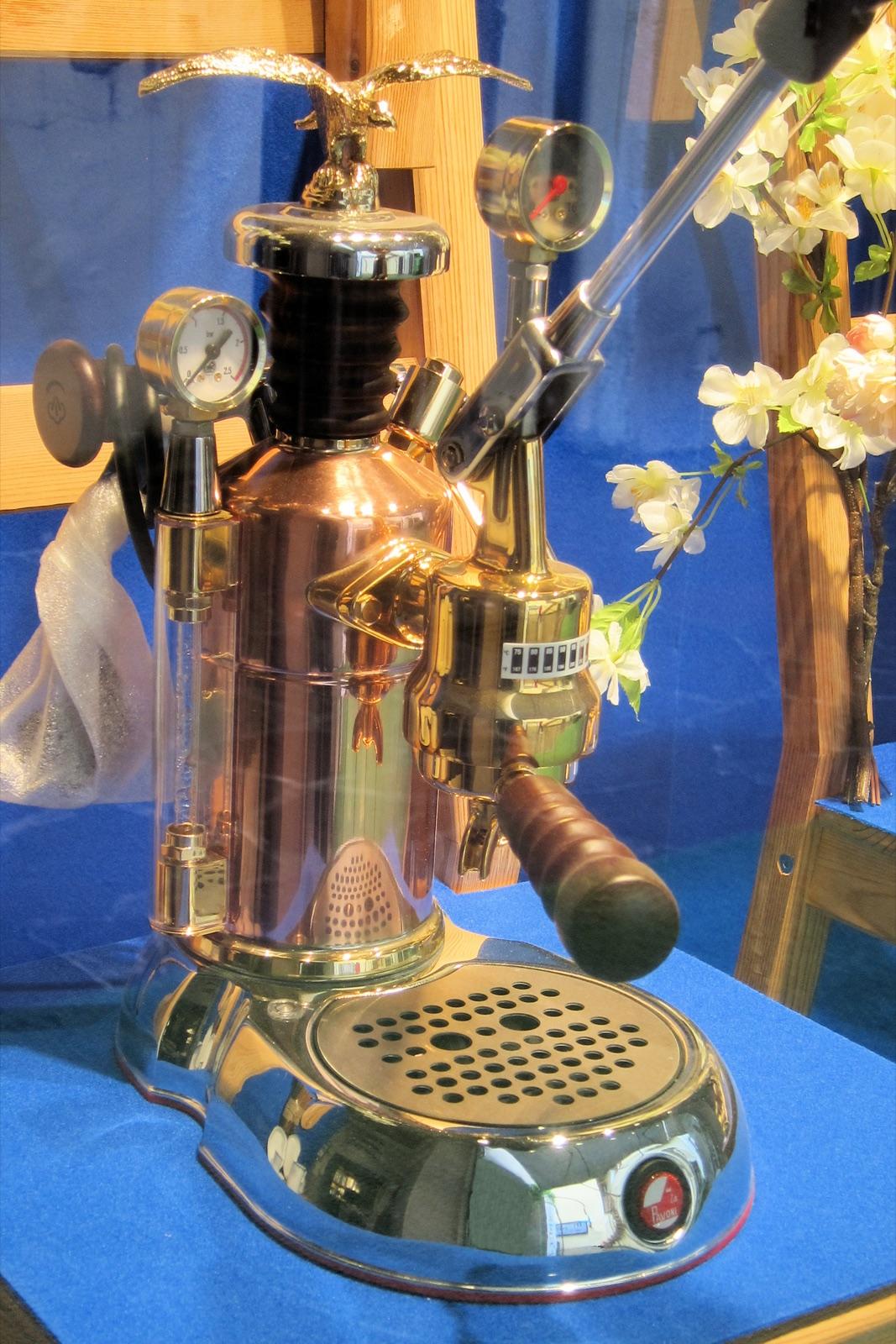
What does a manual espresso machine do that an electric one doesn't? It drops the pump: you pull a lever and your arm supplies the pressure that pushes hot water from a kettle through a puck of fine coffee. The idea of forcing water through coffee is older than the electric pump. Encyclopaedia Britannica records that Angelo Moriondo patented a steam coffee machine in 1884 that brewed in bulk, and that Luigi Bezzera then built the first known machine to force steam and hot water through ground coffee into an individual cup, cutting the brewing time from a few minutes to 30 seconds. Desiderio Pavoni bought Bezzera's 1902 patents the following year, added a pressure-release valve and a steam wand, and the pair showed their Ideale machine at the 1906 World's Fair in Milan.
The hand-lever machines that came later are a story we have not verified against a primary source, so this page leaves it there and sticks to what today's makers publish. A modern lever press such as a Flair does by hand what Bezzera's machine did with steam. Below, we compare the manual makers in our catalogue on their published specs and spell out what the format costs you.
Manual espresso makers in our catalogue
1. Entry lever press
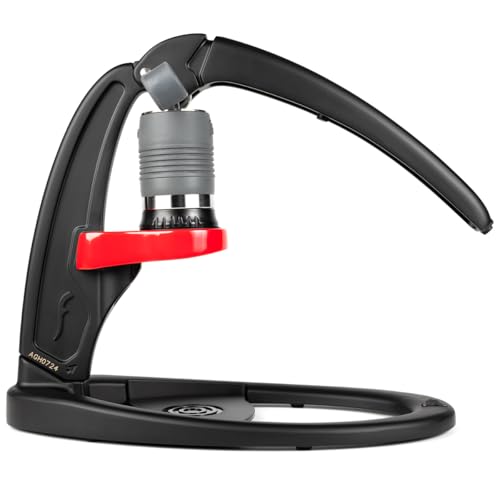
Flair Classic
Flair describes a 100% human-powered direct lever with no plugs or electronics, a 40 mm portafilter, a 60 ml input water capacity and a dose of 12–18 g. Flair lists 9 bar brewing with a pressure gauge, a fully detachable brewing head and a 3-year warranty on the press stand and brewing cylinder.
Buy it if: Straight espresso on a small budget, or a machine that travels. Skip it if: You want milk drinks or several shots in a row.
- Type
- Manual lever
- Heating
- No heater (manual)
- Portafilter
- 40 mm
- Milk
- none
- Water tank
- Input Water Capacity – 60ml
- Size (W×D×H)
- 12.5" L x 6.25" W x 10" H (assembled)
- Weight
- 5 lb
Specs: Flair Espresso US product page (2026-11-09); Flair listing on Amazon (2026-11-09)
2. Larger basket, integrated gauge
Flair 49 PRO
Flair's 49 PRO uses a 49 mm basket, comes with both a pressurised and a bottomless basket, and shows 6–9 bar on an integrated gauge. Flair says no plastics are in the brew path, lists a 90 ml water capacity, a 12–20 g dose, a yield up to 55 ml and a 5-year limited warranty.
Buy it if: Buyers who want room for a bigger dose and a gauge in view for every shot. Skip it if: A $360-ish press without steam feels like the wrong trade against an electric machine.
- Type
- Manual lever
- Heating
- No heater (manual)
- Portafilter
- 49 mm
- Milk
- none
- Water tank
- Input Water Capacity – 90ml
- Size (W×D×H)
- 13.5" L x 7.5" W x 11" H (assembled)
- Weight
- 7 lb
Specs: Flair Espresso US product page (2026-11-09); Flair listing on Amazon (2026-11-09)
3. Hand-pump portable
Wacaco Minipresso GR
Wacaco's listing describes a manual device with no battery or electricity: add ground coffee and boiling water, then pump a few strokes to build pressure. It weighs 0.79 lb and makes up to 50 ml. Wacaco's listing does not state a brewing pressure.
Buy it if: Camping and travel, where a lever stand is too bulky. Skip it if: You want a pressure gauge or a figure for the brewing pressure.
- Type
- Portable
- Heating
- No heater (manual)
- Milk
- none
- Weight
- 0.79 lb
Specs: Wacaco listing on Amazon (2026-11-09)
4. If you'd rather press a button
Breville Bambino
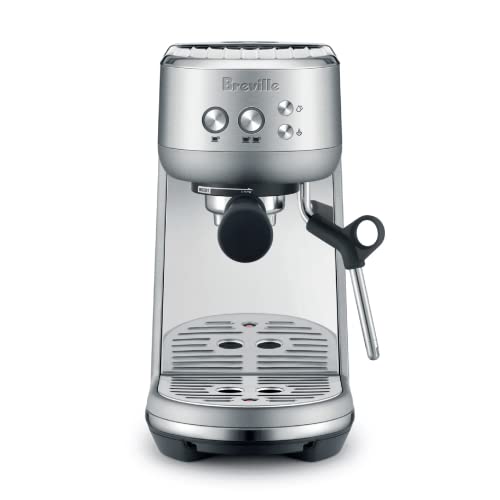
The electric reference point: Breville lists a ThermoJet heater ready in 3 seconds, PID, a 54 mm portafilter, a manual steam wand and a low-pressure pre-infusion leading into 9 bar extraction. It lists at around $300, roughly twice the Flair Classic, and adds heat and steam.
Buy it if: Anyone who wants milk drinks or doesn't want to boil a kettle per shot. Skip it if: You need a machine that works without electricity.
- Type
- Semi-automatic
- Heating
- ThermoJet
- PID
- Yes
- Portafilter
- 54 mm
- Milk
- steam wand (manual milk texturing)
- Heat-up (maker)
- ready to start in 3 seconds
- Water tank
- 47 fl.oz
- Size (W×D×H)
- 7.7 x 12.6 x 12.2 in (W x D x H, Breville listing on Amazon)
- Weight
- 10.42 lb
Specs: Breville US product page (2026-11-09); Breville listing on Amazon (2026-11-09)


Product prices and availability are accurate as of 2026-11-13 and are subject to change. Amazon prices are for the colour linked. Specs are the makers' published figures; we don't test machines.
Every machine, spec by spec
Filter, then tick up to four for a side-by-side view. A dash means the maker doesn't publish that figure.
Specs are each maker's published figures (source linked per machine). Amazon prices as of 2026-11-13; prices change. We earn from qualifying purchases; it never affects matching or order, which is lowest price first.
What 'manual' means, and what it doesn't
Retailers use the word loosely. Breville's own Amazon title calls the electric Bambino a compact, manual coffee maker, because you grind, tamp and steam yourself. On this site, a manual espresso machine means something narrower: no pump and usually no heater. You pour in hot water, and a lever or a hand pump supplies the pressure.
Pressure is the line that matters. INEI, the Italian espresso institute, sets 9 bar ± 1 as the entry water pressure for certified espresso, and the heritage SCAA definition says 9–10 atmospheres. A lever press with a gauge lets you see whether you are near that figure. A device that publishes no pressure figure may or may not get there, and you have no way to check.
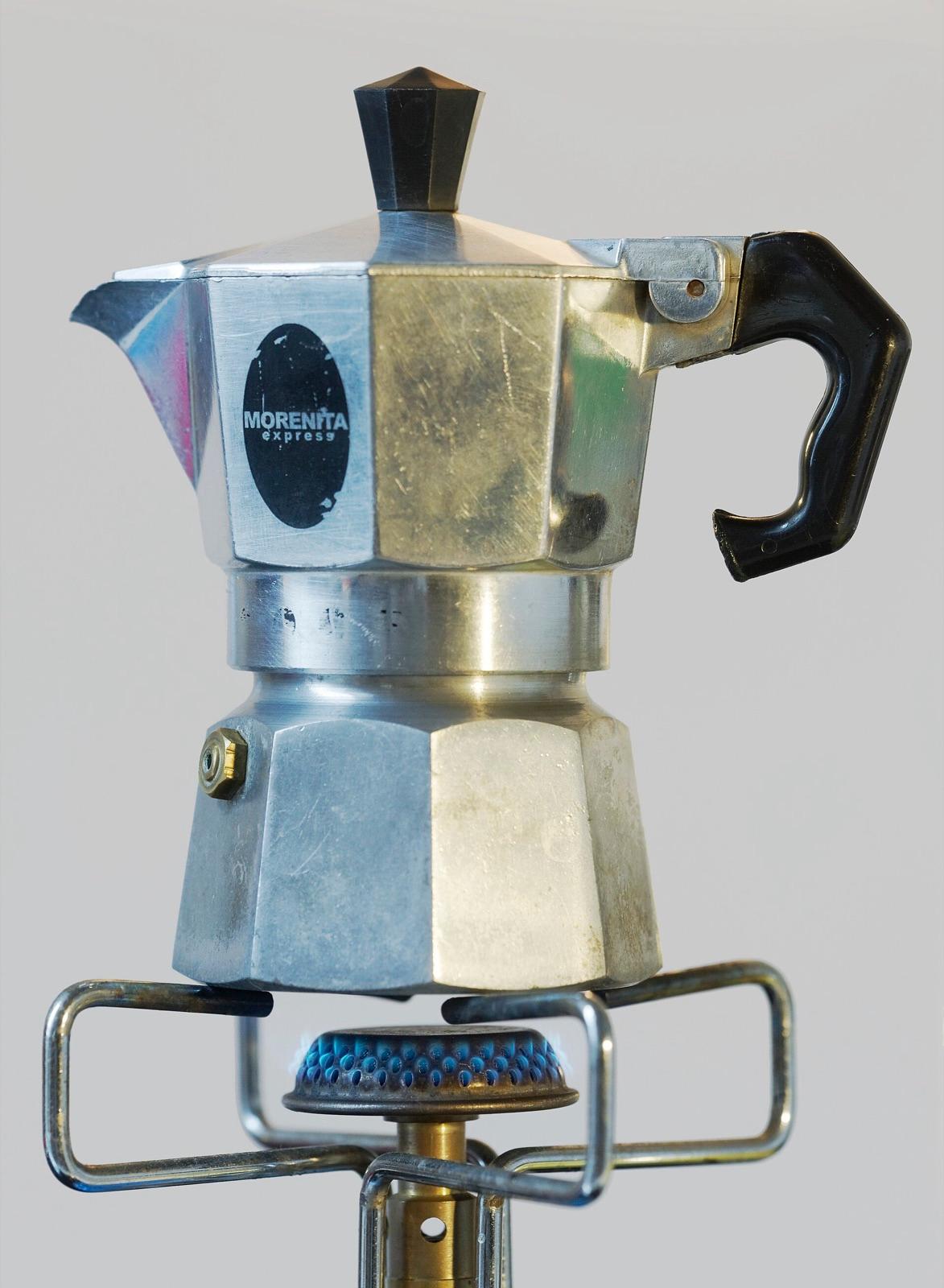
A moka pot is the common mix-up. Bialetti, which makes the Moka Express, says a moka pot brews at about 1.5 bar against at least 9 bar for modern espresso machines. It is a stovetop coffee maker, not a manual espresso machine, however its box is worded.
Three manual makers and one electric machine, side by side
The table lines up the manual makers in our catalogue against the Breville Bambino, the cheapest electric machine many lever buyers also consider. Every value is the maker's published figure; where a maker publishes nothing, the cell says so rather than guessing.
Three rows decide most purchases. The pressure row separates the two Flairs, which show you the brewing pressure on a gauge, from the Minipresso GR, whose listing gives no figure at all. The milk row is the same for every manual maker: none. And the water row explains the daily rhythm: 60 or 90 ml per fill from a kettle, against a 47 fl oz tank on the electric Bambino that heats itself. If the Flair 49 PRO appeals, note that it is also the largest manual maker here, at 13.5 in long, 7.5 in wide and 11 in high assembled, which makes it the bulkiest of the three to pack.
| Spec | Flair Classic | Flair 49 PRO | Wacaco Minipresso GR | Breville Bambino |
|---|---|---|---|---|
| Power | Your arm (lever) | Your arm (lever) | Your hand (pump strokes) | Electric, 1560 W |
| Pressure the maker states | 9 bar brewing, pressure gauge | 6–9 bar on integrated gauge | Not stated | Pre-infusion, then 9 bar extraction (15 bar pump) |
| Water heating | Kettle | Kettle | Kettle (boiling water) | ThermoJet, ready in 3 seconds |
| Water per shot | 60 ml input | 90 ml input | Not stated | 47 fl oz tank |
| Dose | 12–18 g | 12–20 g | Integrated scoop | 18 g in the 54 mm basket |
| Yield | Up to 45 ml (40 ml in Flair's box summary) | Up to 55 ml | Up to 50 ml | 1 cup / 2 cup buttons |
| Portafilter / basket | 40 mm; flow control and bottomless 2-in-1 | 49 mm; pressurised and bottomless baskets | Filter basket for ground coffee | 54 mm; single and dual wall |
| Milk | None | None | None | Manual steam wand |
| Weight | 5 lb | 7 lb | 0.79 lb | 10.42 lb |
| Warranty (maker) | 3 years on stand and cylinder | 5-year limited | Not stated | Not in our record |
The trade-offs nobody puts on the box
No steam. None of the manual makers in our catalogue has any milk system, so lattes and cappuccinos need a separate frother or a stovetop jug. If milk drinks are most of what you make, an electric machine with a steam wand will suit you better for not much more money.
No heat of its own. Flair describes the Classic as having no plugs or electronics, and Wacaco's listing says to add boiling water. You heat water in a kettle, pour it into an unheated cylinder, and the shot happens as that water cools. INEI's certified espresso calls for water leaving the group at 88 °C ± 2 °C, and the heritage SCAA definition gives 90.5–96.1 °C, so the time between kettle and shot matters. Follow the maker's instructions for preheating the brew head.
One shot at a time. The Flair Classic takes 60 ml of water per fill and the 49 PRO 90 ml. Every shot means refilling with hot water, so serving four people is a slow job.
Your arm is the pump. Manual pressure gives you control, but it also makes every shot depend on a steady, repeatable pull. The gauge on both Flairs exists precisely so you can see what your arm is doing.
What you get in return
Visibility. A gauge in front of you during every shot is not a given at entry prices; the Breville Bambino, for one, has no pressure gauge in its listed specs. On the Flair 49 PRO the gauge reads 6–9 bar, which brackets INEI's 9 bar ± 1. That makes a lever press a direct way to learn how pressure, grind and dose interact.
No pump-rating confusion. Electric spec sheets advertise 15 or 20 bar pumps, which are maximum pump ratings; espresso is extracted at around 9 bar, and Breville's own Dual Boiler manual treats a gauge not reaching 9 bars as the fault. A lever press only ever states the pressure you brew at.
Size and simplicity. The Flair Classic weighs 5 lb and measures 12.5 in long by 6.25 in wide assembled, and its brewing head detaches completely for cleaning. The Minipresso GR weighs 0.79 lb. With no pump, heater or circuit board, there are fewer parts inside, and Flair backs the Classic's stand and cylinder for three years and the 49 PRO with a five-year limited warranty.
The grinder decides whether it works
A lever press can only push water through the coffee you give it, so the grind matters even more than on an electric machine with a forgiving basket. Breville's manual puts it plainly: the grind should be fine but not too fine. Too fine and water will not flow under pressure, giving a dark, bitter, over-extracted shot; too coarse and it rushes through, under-extracted and lacking flavour. Baratza's advice for dialling in is to grind finer if a shot is sour and quick, coarser if it is bitter and slow.
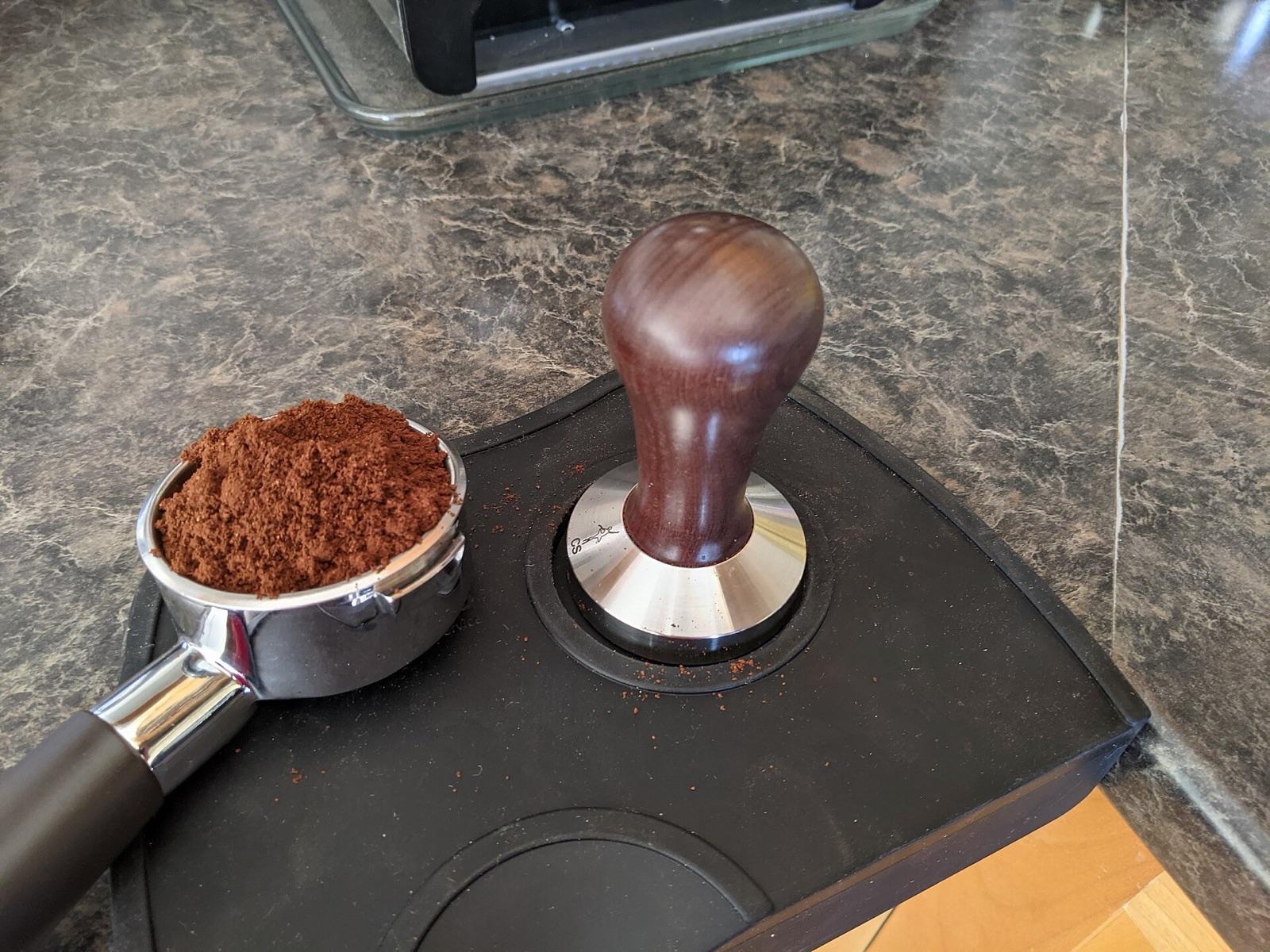
Two practical points follow for Flair owners. First, the baskets are small: 40 mm on the Classic and 49 mm on the 49 PRO. Grinders that grind straight into a portafilter list cradles for common sizes, such as the 50–54 mm and 58 mm cradles Breville includes with the Smart Grinder Pro, so plan to grind into a cup and transfer. Second, the 49 PRO ships with a pressurised basket as well as a bottomless one. Breville's explanation of the same idea applies: a pressurised (dual wall) basket regulates pressure and helps when coffee is pre-ground or the grind is not dialled in, while a single wall basket rewards fresh, correctly ground beans.
Budget for the pair. A Flair Classic at around $160 plus an espresso grinder such as the Baratza Encore ESP at around $200 comes to about the same as a Breville Bambino plus the same grinder. The lever saves little money; you choose it for the format, not the price.
Who should buy one, and who should skip
Run your own habits against these lines. If most of them land on the left, a lever press is a sensible buy; if several land on the right, an electric machine will make your mornings easier.
- Buy: you drink espresso straight, one or two at a time.
- Buy: you want to travel or camp with espresso, or have no spare outlet near the counter.
- Buy: you want to see the brewing pressure on every shot and learn from it.
- Skip: milk drinks are most of what you make; none of these makers has a steam system.
- Skip: you make coffee for several people at once; each shot needs a fresh fill of hot water.
- Skip: you hoped to save money; with a kettle and a proper grinder, the total is close to an entry electric setup.
Questions people ask
- Are manual espresso machines any good?
- They can make espresso at the pressure the standards describe; Flair lists 9 bar brewing for the Classic and a 6–9 bar gauge on the 49 PRO, against INEI's 9 bar ± 1. Whether one is good for you depends on whether you can live without steam and with one shot per fill.
- Is a moka pot a manual espresso machine?
- No. Bialetti says its moka pot brews at about 1.5 bar, against at least 9 bar for espresso machines. That is well short of the INEI and heritage SCAA pressure figures, so moka coffee is stovetop coffee, not espresso.
- Can you steam milk with a manual espresso machine?
- Not with the ones in our catalogue; Flair and Wacaco list no milk system. You would need a separate frother or a stovetop milk jug.
- Do I need a special grinder for a Flair?
- You need a grinder that its maker sells for espresso, because the lever only pushes water through the coffee you give it. Expect to grind into a cup, since common portafilter cradles are sized for 50–54 mm and 58 mm baskets, not Flair's 40 mm or 49 mm.
- Is a Flair better than a Breville Bambino?
- They suit different people. The Flair gives you a pressure gauge and needs no power; the Bambino adds a heater ready in 3 seconds (per Breville), PID and a steam wand for milk. For milk drinks or speed, the Bambino; for straight espresso, travel or manual control of every shot, the Flair.
- How many shots can a manual espresso maker make in a row?
- One per fill. The Flair Classic takes 60 ml of water and the 49 PRO 90 ml per brew, so every shot needs a refill of hot water from the kettle.
Sources & further reading
- Encyclopaedia Britannica, espresso (archived copy, 2026-11-09)
- Flair Classic product page (2026-11-09)
- Flair 49 PRO product page (2026-11-09)
- Wacaco Minipresso GR listing on Amazon (2026-11-09)
- Breville Bambino BES450 product page (2026-11-09)
- Breville Barista Express BES875 instruction book (2026-11-09)
- Breville Dual Boiler BES920 instruction book (2026-11-09)
- Breville Smart Grinder Pro BCG820 product page (2026-11-09)
- Baratza, Dialing in Espresso (2026-11-09)
- Bialetti, How the Moka works (2026-11-09)
- INEI, A Brief Guide to the Italian Certified Espresso (archived PDF, 2026-11-09)
- SCA 25 Magazine, Defining the Ever-Changing Espresso (2026-11-09)
Read next
- Types of Espresso Machines
Types of espresso machines sorted two ways: who grinds, tamps and stops the shot, and how the water is heated. A step-by-step table and 45 machines counted.
- How to Make Espresso
How to make espresso at home, step by step: INEI and SCAA parameters, an 18 g in, 36 g out recipe, grind, tamp and timing, and fixes when a shot tastes off.
- Espresso Grinders
Espresso grinder guide: 14 grinders sorted by what their makers say about espresso, with burr size, settings, stepless or stepped, and a machine matcher.
- Espresso Machines Under $200
Best espresso machine under 200 dollars, without the myths: why 20-bar labels mislead, what pressurised baskets do, and six picks with makers' published specs.
Part of Types of Espresso Machines. Back to the EspressoGoods home page.

EspressoGoods editors · Editorial team
EspressoGoods' catalogue and guides are compiled by the site's editorial team from espresso machine and grinder makers' own product pages, spec sheets and manuals, plus standards bodies such as the Istituto Nazionale Espresso Italiano. We do not test machines or taste shots, and we never claim to: every spec on the site links to the page it came from.
About this site · How pages are checked · Last updated November 8, 2026
As an Amazon Associate, EspressoGoods earns from qualifying purchases. It costs you nothing extra and never decides which machines we list.
EspressoGoods is an independent site. It is not affiliated with Breville, De'Longhi, Gaggia, Rancilio, Philips, Ninja or any other maker. Brand names and trademarks belong to their owners. Specs are the makers' published figures; check the maker's page before you buy.