Guide
Dual Boiler Espresso Machine: Do You Need One, or Will a Single Boiler Do?
By EspressoGoods editors · Updated 2026-11-08 · How we research
We may earn a commission when you buy through links on this page.
Short answer
You need a dual boiler only if you make milk drinks back to back and don't want to wait between brewing and steaming. One boiler holds brew temperature while the other holds steam. Heat-exchanger machines also brew and steam at once, but La Marzocco notes they need a cooling flush before each shot. The Breville Dual Boiler (around $1,500) is the entry point; the Rancilio Silvia Pro X and Lelit Bianca add bigger steam boilers.
Steam milk on a dual boiler espresso machine and the shot you are brewing does not notice, because the water for each comes from a different tank of heat. On a single boiler machine the same boiler has to climb from brew temperature to steam temperature and back, so you brew, wait, steam, and wait again. That one mechanical difference is the whole case for buying a dual boiler, and it is why the case is strong for some kitchens and weak for others.
This page explains the four heating systems you will meet on spec sheets in the makers' own words, shows the boiler sizes the makers publish, and lists the dual boilers in our catalogue with their published specs. We compile makers' specifications and standards documents; we don't run tests of our own, so every number below links to its source.
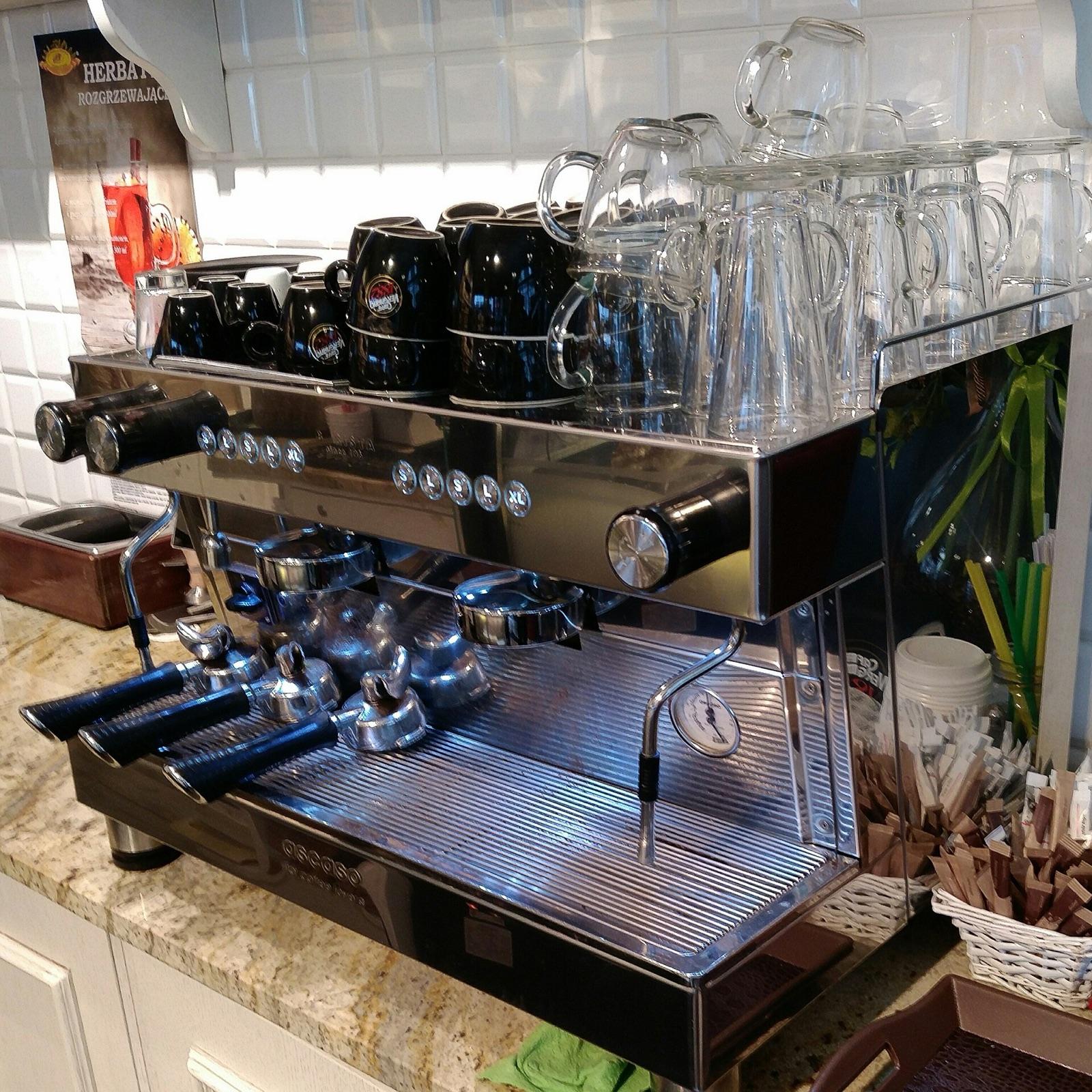
Dual boiler machines in our catalogue
1. Lowest list price dual boiler
Breville Dual Boiler
Breville lists a dedicated espresso boiler with digital PID control, a PID-controlled heated group head and dual 15 bar pumps that it says allow milk texturing and extraction at the same time. It takes 58 mm baskets in both single and dual wall, and a low-pressure pre-infusion leads into 9 bar extraction.
Buy it if: Milk-drink households that want two boilers at the lowest list price in this group. Skip it if: Your counter is under 16 in deep, or you only drink straight espresso.
- Type
- Semi-automatic
- Heating
- dual boiler
- PID
- Yes
- Portafilter
- 58 mm
- Milk
- steam wand (powerful manual milk texturing)
- Water tank
- 84 oz
- Size (W×D×H)
- 37.9 x 40.3 x 37.1 cm (W x D x H)
- Weight
- 28.35 lb
Specs: Breville US product page (2026-11-09); Breville listing on Amazon (2026-11-09)
2. Narrowest dual boiler
Rancilio Silvia Pro X
Rancilio lists a 0.3 l coffee boiler, a 1 l steam boiler and two PID controllers, one per boiler. At 9.8 in wide it is the slimmest dual boiler we list, though at 16.5 in it is also the deepest. Soft pre-infusion is adjustable from 0 to 6 seconds, and a display shows a shot timer.
Buy it if: Narrow counters with plenty of depth. Skip it if: You want a pump pressure figure on the spec sheet; Rancilio doesn't publish one.
- Type
- Semi-automatic
- Heating
- dual boiler
- PID
- Yes
- Milk
- multi-directional stainless steel steam wand
- Water tank
- Integrated 2 litre water tank
- Size (W×D×H)
- 250 x 420 x 390 mm / 9.8 x 16.5 x 15.3 in (W x D x H)
- Weight
- 44.1 lb
Specs: Rancilio Silvia Pro X product page (2026-11-09); Rancilio Home Line catalogue 2022 (ranciliogroup.com, technical specifications) (2026-11-09); Rancilio listing on Amazon (2026-11-09)
3. Dual boiler with a grinder built in
Meraki Meraki Espresso Machine (dual boiler with grinder)
Meraki pairs a 350 ml brew boiler and a 550 ml steam boiler with a built-in burr grinder co-engineered with TIMEMORE (45 settings) and built-in dual scales that it rates at 1 kg capacity and ±0.2 g. It lists a 9 bar rotary pump, pre-infusion and a 58 mm portafilter.
Buy it if: Buyers who want one box that grinds, weighs and steams. Skip it if: You'd rather upgrade the grinder separately later.
- Type
- Semi-automatic
- Heating
- dual boiler
- PID
- Yes
- Grinder
- espresso-tailored burr grinder co-engineered with TIMEMORE, 45 settings with micro-adjustment, ion beam static-free grinding
- Portafilter
- 58 mm
- Milk
- steam wand with Auto Temp Stop
- Water tank
- 2000 ml
- Size (W×D×H)
- 370 x 370 x 415 mm
- Weight
- 32 lb
Specs: Meraki product page (2026-11-09); Meraki listing on Amazon (2026-11-09)
- Lelit
4. Largest steam boiler
Lelit Bianca
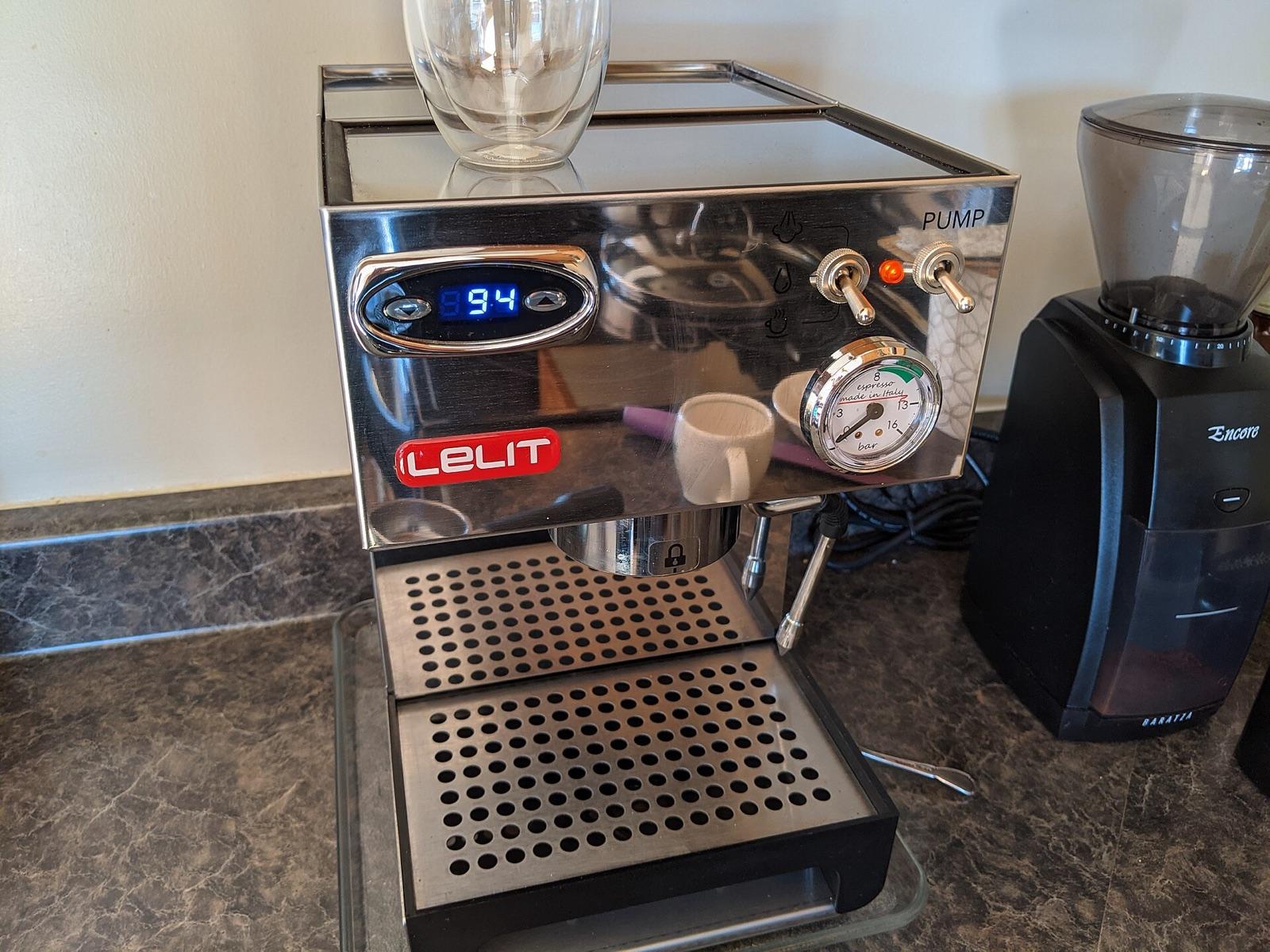
Lelit lists a 1.5 l steam boiler and an 800 ml coffee boiler, the largest pair in our catalogue, plus a paddle for manual control of water flow and a group manometer. Lelit's page describes its LCC electronic control rather than using the word PID. It is sold in the US through distributors, not Amazon.
Buy it if: Long milk sessions and buyers who want manual flow control. Skip it if: You need a confirmed depth: Lelit and its US distributor publish different figures.
- Type
- Semi-automatic
- Heating
- dual boiler
- Portafilter
- 58 mm
- Milk
- anti-burn multidirectional steam wand
- Water tank
- Water tank: 2.5 l; steam boiler 1.5 l; coffee boiler 800 ml
- Size (W×D×H)
- 29 x 58.5 x 39 cm + 8 cm movable tank (L x D x H as published)
- Weight
- 60 lb
Specs: Lelit Bianca PL162T product page (2026-11-09); Seattle Coffee Gear (US Lelit distributor) product page (2026-11-09)


Product prices and availability are accurate as of 2026-11-13 and are subject to change. Amazon prices are for the colour linked. Specs are the makers' published figures; we don't test machines.
Every machine, spec by spec
Filter, then tick up to four for a side-by-side view. A dash means the maker doesn't publish that figure.
| Compare | Machine | Price | Heating | PID | Grinder | Portafilter | Width | Heat-up |
|---|---|---|---|---|---|---|---|---|
| Breville Dual Boiler | $1599.95 | Dual boiler | Yes | — | 58 mm | 14.9 in | — | |
| Meraki Meraki Espresso Machine (dual boiler with grinder) | $1999 | Dual boiler | Yes | Yes | 58 mm | 14.6 in | — | |
| Rancilio Silvia Pro X | $2195 | Dual boiler | Yes | — | — | 9.8 in | — | |
| Lelit Bianca | $2999.95 | Dual boiler | — | — | 58 mm | 11.4 in | — | |
| Profitec Pro 600 | — | Dual boiler | Yes | — | — | 12 in | — |
5 of 45 machines shown, lowest price first. Prices: Amazon as of 2026-11-13, or the maker's list price where the machine isn't on Amazon.
Specs are each maker's published figures (source linked per machine). Amazon prices as of 2026-11-13; prices change. We earn from qualifying purchases; it never affects matching or order, which is lowest price first.
What actually happens inside: brew boiler, steam boiler
La Marzocco, which says dual boilers have been in its machines since the GS in 1970, describes the split plainly: the brew boiler operates at a stable temperature optimised for extraction, while the steam boiler runs at a much higher temperature and pressure to make dry, powerful steam. Profitec adds the practical result: because each boiler keeps its own temperature, you can brew espresso and steam milk at the same time.
Brew water and steam want very different conditions. INEI, the Italian espresso institute, sets the water leaving the group for certified espresso at 88 °C ± 2 °C, and the heritage SCAA definition uses 90.5–96.1 °C. Steam needs water well above boiling. A single heater cannot hold both at once, so every design below is a different answer to that conflict.
The diagram shows where the water goes in each design.
Water path by heating system (from Quick Mill, Profitec and La Marzocco definitions)
THERMOBLOCK   tank -> pump -> flow-through heater -> group      (steam: same heater, re-set hotter)
SINGLE BOILER tank -> pump -> one boiler -> group               (steam: same boiler, raised to steam temp)
HEAT EXCH.    tank -> pump -> tube through steam boiler -> group (steam: boiler, always hot)
DUAL BOILER   tank -> pump -> brew boiler -> group
              tank -> pump -> steam boiler -> steam wand        (both held at once)
Four heating systems compared
Spec sheets rarely use the same words, so here is each system as its makers define it, with a machine from our catalogue that uses it. Note that none of the machines in our catalogue is a heat exchanger; we include it because most dual boiler shopping lists put the two side by side.
| System | How the maker describes it | Brew and steam at once? | Catalogue example |
|---|---|---|---|
| Thermoblock (Breville: ThermoJet, Thermocoil) | Compact element heats water on demand as it flows through; very fast heat-up (Quick Mill) | No: one heater | Breville Bambino (ThermoJet, ready in 3 seconds per Breville) |
| Single boiler | One boiler for brewing and steaming; you wait when switching (Quick Mill, Profitec) | No | Gaggia Classic E24 (lead-free brass boiler); Profitec GO |
| Heat exchanger (HX) | One boiler kept at steam temperature; brew water flash-heated in a tube through it; needs a cooling flush before each shot (La Marzocco) | Yes | None in our catalogue |
| Dual boiler | Two independent boilers, one for brew and one for steam, each at its own temperature (Profitec, La Marzocco) | Yes | Breville Dual Boiler, Rancilio Silvia Pro X, Lelit Bianca, Meraki, Profitec Pro 600 |
How big are the boilers? The published volumes
Boiler volume is the one spec that tells you how much steam you have before the boiler has to recover. Four of the five dual boilers in our catalogue publish both volumes. Breville does not list litre figures for the BES920's boilers on the pages we read, so it is missing from the chart rather than estimated.
Read the steam bars for milk: the Lelit's 1.5 l steam boiler is nearly three times the Meraki's 550 ml. Read the brew bars for temperature stability under repeated shots. A small brew boiler is not a fault in itself; Rancilio pairs its 0.3 l coffee boiler with a dedicated PID controller.
To put the volumes in drink terms, INEI describes a traditional cappuccino as 25 ml of espresso and 100 ml of steam-foamed milk. Each cappuccino therefore asks the steam boiler for one small jug of milk, and a household making four in a row asks for four jugs while the brew boiler keeps pulling shots. A larger steam boiler holds more stored heat between recoveries; none of these makers publishes how many drinks in a row their boiler supports, so treat the volume as a comparison between machines, not as a drink count.
Who should skip the second boiler?
Profitec, which sells both single and dual boiler machines, says single boilers are best suited for people who only make milk drinks occasionally. Read the other way round, that tells you who a dual boiler is for: someone making two or more milk drinks in a row, most days.
If you drink straight espresso, the steam boiler sits hot and unused. You would be paying for, and making room for, hardware you don't need. A thermoblock machine with PID, such as the Breville Bambino, brews at a controlled temperature in a much smaller footprint: 7.7 in wide against 14.9 in for Breville's own Dual Boiler.
PID alone is not the deciding spec either. Quick Mill describes PID as electronic regulation of the heating element to minimise temperature swings, and adds that it is not the only way a machine can reach stable brewing conditions. Every dual boiler we list from Breville, Rancilio, Meraki and Profitec states PID control; Lelit describes an electronic controller with a brew temperature function instead.
There is a middle road for milk drinkers on a tighter budget: a single boiler or thermoblock machine with an automatic or assisted steam wand still can't steam during the shot, but it removes most of the technique from the milk step. The Breville Bambino Plus, for example, lists hands-free milk texturing on a ThermoJet heater, and it is around a third of the Dual Boiler's list price.
- Straight espresso, one or two a day: thermoblock or single boiler.
- One milk drink a day, can wait a minute: single boiler is workable (Profitec's own advice).
- Several milk drinks back to back: dual boiler or heat exchanger.
- You want to set brew temperature directly and skip the cooling flush: dual boiler (La Marzocco's distinction).
Check your counter before you check the price
Dual boilers are big and heavy, and a machine that won't fit under your wall cabinets is the most common avoidable mistake on this kind of purchase. Measure the space from the back wall to the counter edge and from the counter to the cabinet underside, then leave room to lift a lid or slide out the water tank.
Weight matters if you plan to move the machine to fill or clean it. The Lelit Bianca is listed at 60 lb and the Profitec Pro 600 at 52.9 lb, against 28.35 lb for the Breville. Lelit and its US distributor publish different depths for the Bianca (58.5 cm against 16 in), so confirm the depth with the seller before you order.
| Machine | Width | Depth | Height | Weight | Water tank |
|---|---|---|---|---|---|
| Breville Dual Boiler | 14.9 in | 15.9 in | 14.6 in | 28.35 lb | 84 oz |
| Rancilio Silvia Pro X | 9.8 in | 16.5 in | 15.3 in | 44.1 lb | 2 l |
| Meraki (MEM03) | 14.6 in* | 14.6 in* | 16.3 in | 32 lb | 2,000 ml |
| Lelit Bianca (PL162T) | 11.4 in | not confirmed | 15.4 in | 60 lb | 2.5 l |
| Profitec Pro 600 | 12.0 in | 17.7 in | 15.6 in | 52.9 lb | 2.8 l |
Warm-up time: the number most makers leave out
Two boilers full of water take longer to heat than a flow-through heater, but none of the dual boiler makers in our catalogue publishes a heat-up time for these models. Breville publishes none for the BES920, Rancilio none for the Silvia Pro X, Meraki none for its machine, and Profitec describes a programmable Fast Heat-Up Mode for the Pro 600 without giving a figure.
For contrast, Breville says the Bambino's ThermoJet is ready to start in 3 seconds, and Profitec states about 7 minutes in Fast Heat-Up Mode for its single boiler GO. If morning speed matters, ask the seller for the heat-up figure in writing,, and plan your routine around it.
Reading a dual boiler spec sheet
Five lines on the spec sheet answer most of the questions worth asking.
Pump type is a useful sixth line when the maker gives it. Meraki lists a rotary pump at 9 bar, while Profitec lists a vibration pump for the Pro 600 and fits gauges for both boiler and pump pressure. Breville lists two 15 bar Italian pumps and an over-pressure valve that limits maximum pressure during extraction. None of these lines tells you how the espresso tastes; they tell you what the machine lets you control.
- Boiler volumes: both figures, in litres or millilitres. A missing figure is worth asking about.
- Temperature control: does the maker say PID for the brew boiler, the steam boiler, or both? Rancilio lists two PID controllers; Breville names PID on the espresso boiler and the group head.
- Pressure: look for the extraction pressure, not only the pump rating. INEI's certified espresso uses 9 bar ± 1, and Breville's own BES920 manual treats a gauge not reaching 9 bars as the fault to fix. A 15 bar pump rating is a maximum.
- Portafilter size: 58 mm is listed for the Breville, Meraki and Lelit; Rancilio lists a 58 mm tamper but not the portafilter size.
- Footprint and weight: compare against your measured space, as above.
Questions people ask
- Is a dual boiler espresso machine worth it if I only drink espresso?
- Usually not. The second boiler exists to make steam while you brew. Without milk drinks it sits hot and unused, and a thermoblock or single boiler machine with stable temperature control costs far less and takes up less counter space. If you might start making lattes later, a single boiler machine with a steam wand is a cheaper hedge.
- What is the difference between a dual boiler and a heat exchanger?
- Both let you brew and steam at once. A heat exchanger keeps one boiler at steam temperature and flash-heats brew water in a tube running through it, which La Marzocco says needs a cooling flush before each shot. A dual boiler heats brew water in its own boiler at its own set temperature.
- What is the cheapest dual boiler espresso machine?
- In our catalogue, the Breville Dual Boiler has the lowest list price, around $1,500 on Breville's site; Amazon's live price can differ, so check the card. The others we list run from around $2,000 upward or are sold only through distributors.
- Do dual boiler machines take longer to heat up?
- They heat more water, but the makers we list don't publish heat-up times for their dual boilers, so we can't give you a figure. Ask the seller for the figure in writing before you buy.
- Can a single boiler machine make lattes?
- Yes. You brew first, then switch the boiler to steam temperature and wait for it. Profitec says this suits people who make milk drinks occasionally. It becomes tedious when you make several in a row.
Sources & further reading
- La Marzocco USA, the importance of dual boilers (2026-11-09)
- Profitec, which Profitec espresso machine suits you (2026-11-09)
- Quick Mill, guide to choosing an espresso machine (2026-11-09)
- INEI, A Brief Guide to the Italian Certified Espresso (archived PDF, 2026-11-09)
- SCA 25 Magazine, Defining the Ever-Changing Espresso (2026-11-09)
- Breville Dual Boiler BES920 product page (2026-11-09)
- Breville Dual Boiler BES920 instruction book (2026-11-09)
- Rancilio Silvia Pro X product page (2026-11-09)
- Rancilio Home Line catalogue 2022 (2026-11-09)
- Meraki Espresso Machine product page (2026-11-09)
- Lelit Bianca PL162T product page (2026-11-09)
- Seattle Coffee Gear, Lelit Bianca spec table (US distributor, 2026-11-09)
- Profitec Pro 600 product page (archived 2025-01-21, read 2026-11-09)
- Breville Bambino BES450 product page (2026-11-09)
Read next
- Types of Espresso Machines
Types of espresso machines sorted two ways: who grinds, tamps and stops the shot, and how the water is heated. A step-by-step table and 45 machines counted.
- PID Espresso Machines
PID espresso machine explained: what the controller does, when it matters by boiler type, and 28 machines showing which makers state PID and which do not.
- Espresso Machines for Lattes
Best espresso machine for lattes by milk system: manual wand, automatic wand, carafe or whisk, plus boiler type for back-to-back drinks. Maker specs only.
- Super-Automatic Espresso Machines
Super automatic espresso machine picks from De'Longhi, Philips, Jura and Ninja, compared by milk system, grind steps, cleaning claims and counter depth.
- Best Espresso Machines Under $1,000
Best espresso machine under 1000 dollars, picked from makers' spec sheets: built-in grinder or not, PID, 58 mm baskets, milk automation and live prices.
- Espresso Machine Comparison
Espresso machine comparison tool and chart: filter 45 machines by type, heater, PID, grinder, portafilter and milk, and learn what each spec column means.
Part of Types of Espresso Machines. Back to the EspressoGoods home page.

EspressoGoods editors · Editorial team
EspressoGoods' catalogue and guides are compiled by the site's editorial team from espresso machine and grinder makers' own product pages, spec sheets and manuals, plus standards bodies such as the Istituto Nazionale Espresso Italiano. We do not test machines or taste shots, and we never claim to: every spec on the site links to the page it came from.
About this site · How pages are checked · Last updated November 8, 2026
As an Amazon Associate, EspressoGoods earns from qualifying purchases. It costs you nothing extra and never decides which machines we list.
EspressoGoods is an independent site. It is not affiliated with Breville, De'Longhi, Gaggia, Rancilio, Philips, Ninja or any other maker. Brand names and trademarks belong to their owners. Specs are the makers' published figures; check the maker's page before you buy.